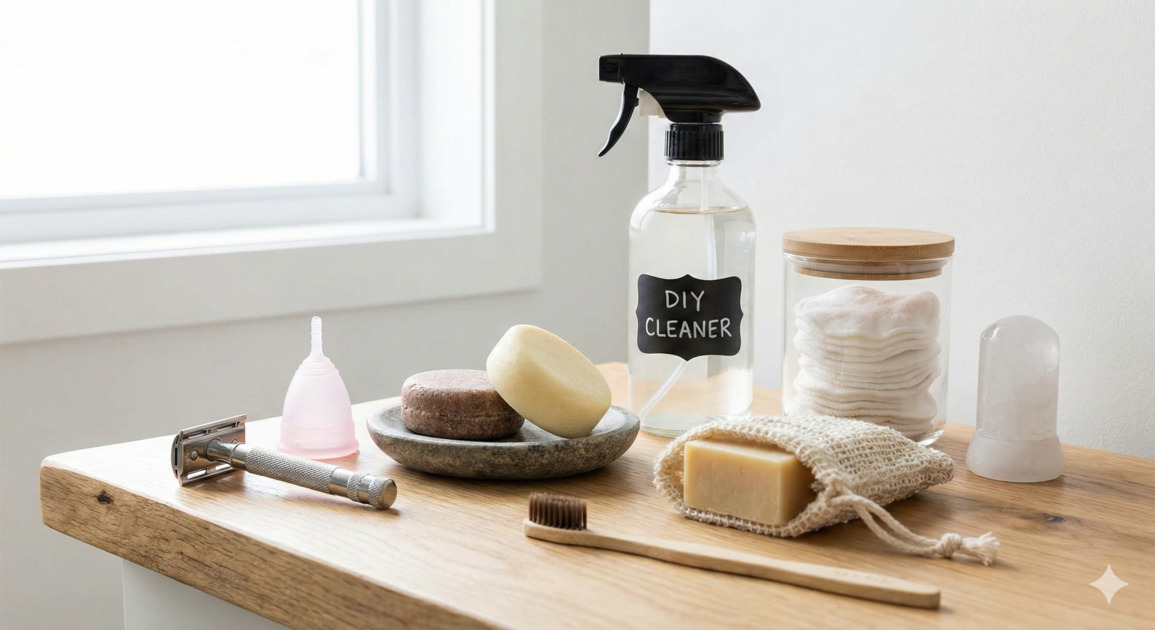
10 Zero Waste Swaps for Your Bathroom That Save Money
There is a common misconception that "going green" requires a lot of green. While some eco-friendly products carry a premium price tag, the core of the zero waste movement—reducing, reusing, and simplifying—is inherently good for your wallet.
The bathroom is one of the easiest places to start. It is often the room with the most single-use plastic and disposable items. By switching to durable, reusable, or concentrated alternatives, you can stop throwing money in the trash (literally).
Here are 10 zero waste bathroom swaps that save money long term, helping you build a sustainable bathroom on a budget.
1. Stainless Steel Safety Razor
If you only make one swap on this list, make it this one. Disposable plastic razors and expensive cartridge refills are a massive recurring expense.
- The Swap: A durable stainless steel safety razor handle.
- The Savings: While the handle might cost $20-$50 upfront, the replacement blades cost pennies (often around $0.10 each). Compare that to $3.00+ for a single cartridge head.
- Eco Impact: You eliminate the plastic waste of handles and mixed-material cartridges that cannot be recycled.
2. Menstrual Cups or Discs
For those who menstruate, the cost of tampons and pads adds up significantly over a lifetime.
- The Swap: A medical-grade silicone menstrual cup or disc.
- The Savings: One cup costs roughly $30 but can last up to 10 years. By avoiding the monthly purchase of disposables, you can save hundreds of dollars annually.
- Eco Impact: Replaces thousands of single-use tampons and pads, along with their plastic applicators and wrappers.
3. Shampoo and Conditioner Bars
Liquid hair products are 80-90% water. You are paying for water and a plastic bottle to hold it.
- The Swap: Solid shampoo and conditioner bars.
- The Savings: A single bar often equals two to three bottles of liquid shampoo because it is highly concentrated. This makes them one of the most affordable zero waste bathroom products when you calculate cost-per-wash.
- Eco Impact: Zero plastic packaging and lighter shipping weights reduce carbon footprints.
4. DIY All-Purpose Cleaner
Stop buying specialized "bathroom cleaners" in plastic spray bottles.
- The Swap: A homemade mix of white vinegar and water (50/50 ratio) for mirrors and surfaces, and baking soda for scrubbing tubs and tiles.
- The Savings: A gallon of vinegar costs a fraction of what a standard cleaning spray costs.
- Eco Impact: Eliminates harsh chemicals and the endless cycle of buying plastic trigger bottles.
5. Reusable Cotton Rounds
Disposable cotton balls and rounds are a constant drain on your budget and resources.
- The Swap: Washable cloth rounds (made from bamboo, organic cotton, or even upcycled old t-shirts).
- The Savings: Buy (or make) a set once, and they can last for years.
- Eco Impact: Cotton is a water-intensive crop; reusing it is far superior to tossing it after one swipe.
6. Bar Soap Over Liquid Body Wash
Body wash is another product where you pay a premium for water and plastic packaging.
- The Swap: A simple, package-free bar of soap.
- The Savings: Bar soap is generally significantly cheaper than liquid body wash and lasts just as long if stored correctly.
- Eco Impact: No plastic pump bottles ending up in the landfill.
7. A Soap Saver Bag
One complaint about bar soap is that it gets mushy or becomes unusable when it gets small.
- The Swap: A sisal or cotton soap saver bag.
- The Savings: This bag allows you to collect all the tiny slivers of soap that usually go down the drain and combine them into a functional scrubber. It ensures you use 100% of the product you paid for.
- Eco Impact: Acts as a natural exfoliant, replacing plastic loofahs (which shed microplastics).
8. Bidet Attachment
In the wake of toilet paper shortages and rising costs, the bidet has made a comeback.
- The Swap: An easy-to-install bidet attachment for your toilet seat.
- The Savings: While there is an upfront cost ($30-$50), it reduces toilet paper usage by up to 75%.
- Eco Impact: Reduces the massive amount of water, bleach, and trees used to produce toilet paper.
9. Bamboo Toothbrush (in Bulk)
Plastic toothbrushes are non-recyclable and pile up in landfills.
- The Swap: Bamboo toothbrushes with compostable handles.
- The Savings: Buying these individually can be pricey, but buying "family packs" or bulk sets online often brings the price down to less than $2 per brush—competitive with standard plastic brushes.
- Eco Impact: Bamboo is a fast-growing, renewable resource.
10. Refillable Deodorant or Alum Stone
Traditional deodorant sticks are housed in complex plastic mechanisms that are rarely recyclable.
- The Swap: A crystal deodorant stone (potassium alum) or a refillable deodorant stick.
- The Savings: A single crystal deodorant stone can last for one to two years, costing roughly $5-$10. This is massive savings compared to buying a new stick every few months.
- Eco Impact: Eliminates the mixed-plastic waste of traditional applicators.
Cost Comparison: The "Safety Razor" Example
To visualize the savings of DIY zero waste bathroom swaps and product changes, let's look at the math for shaving over one year.
| Item | Traditional Option Cost | Zero Waste Option Cost |
|---|---|---|
| Razor Handle | $10.00 | $35.00 |
| Refills (1/week) | $156.00 ($3/cartridge) | $5.20 ($0.10/blade) |
| Total Year 1 | $166.00 | $40.20 |
| Total Year 2 | $156.00 | $5.20 |
By Year 2, the zero waste swap saves you over $150 annually on just one item.
Final Thoughts
Creating a sustainable bathroom doesn't have to happen overnight. Start with one item—perhaps the one you are about to run out of—and replace it with a reusable alternative. Not only will your bathroom look less cluttered without all the plastic branding, but your bank account will also thank you.