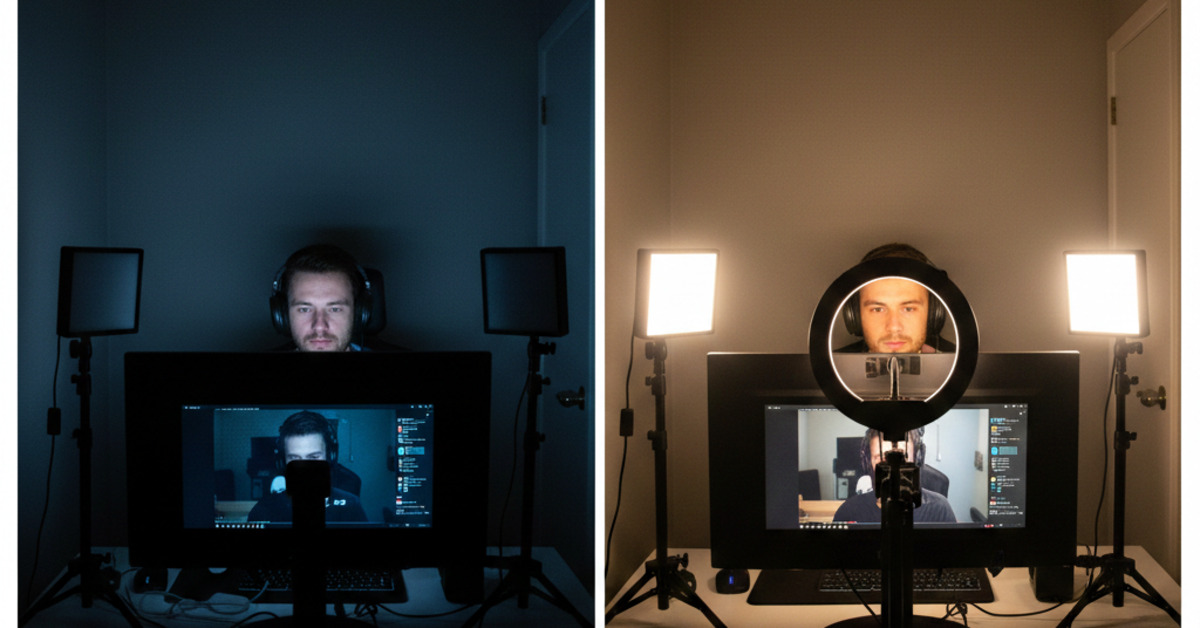
Best Lighting Setup for Streaming in a Small Room
Good lighting is one of the most important factors in producing a professional-looking stream. It can make the difference between a grainy, amateurish broadcast and a crisp, clear one that captivates your audience. But what if you're streaming from a small room? Don't worry, you don't need a Hollywood-sized studio to achieve great lighting. With a few key pieces of equipment and a little bit of know-how, you can create a flattering and effective lighting setup in even the most compact of spaces.
The Three Pillars of Lighting: Three-Point Lighting
The foundation of any good lighting setup is three-point lighting. This classic technique uses three light sources to illuminate a subject (in this case, you) from different angles, creating a sense of depth and dimension. The three lights are:
- Key Light: This is your main light source, and it should be the brightest of the three. It's typically placed to one side of your camera, at a 45-degree angle to your face.
- Fill Light: The fill light is placed on the opposite side of the camera from the key light. Its purpose is to "fill in" the shadows created by the key light, reducing contrast and creating a more even, flattering look.
- Backlight (or Hair Light): The backlight is placed behind you, and it's used to separate you from the background. This creates a subtle rim of light around your head and shoulders, adding depth and preventing you from looking like a "floating head."
Lighting Solutions for Small Spaces
Now, let's talk about how to apply the principles of three-point lighting in a small room.
- Key Light: For a small space, a softbox is an excellent choice for a key light. Softboxes produce a soft, diffused light that is very flattering on skin. Look for a small, rectangular softbox that can be easily mounted on a light stand.
- Fill Light: A ring light is a great option for a fill light in a small room. Ring lights produce a very soft, even light that can help to eliminate shadows. Many ring lights can be mounted directly to your desk or monitor, saving valuable floor space.
- Backlight: You don't need a powerful light for a backlight. A small, inexpensive LED panel or even a clamp light with a diffusion filter can work well. You can place the backlight on a shelf or a piece of furniture behind you.
Putting It All Together
Once you have your lights, it's time to set them up. Start by placing your key light and fill light in their respective positions. Then, adjust the brightness of each light until you have a look that you're happy with. Finally, add the backlight to create separation from the background.
Don't be afraid to experiment with the placement and brightness of your lights. Every room is different, so what works for one person may not work for another. With a little bit of trial and error, you'll be able to create a lighting setup that makes you look your best on stream, no matter how small your space.