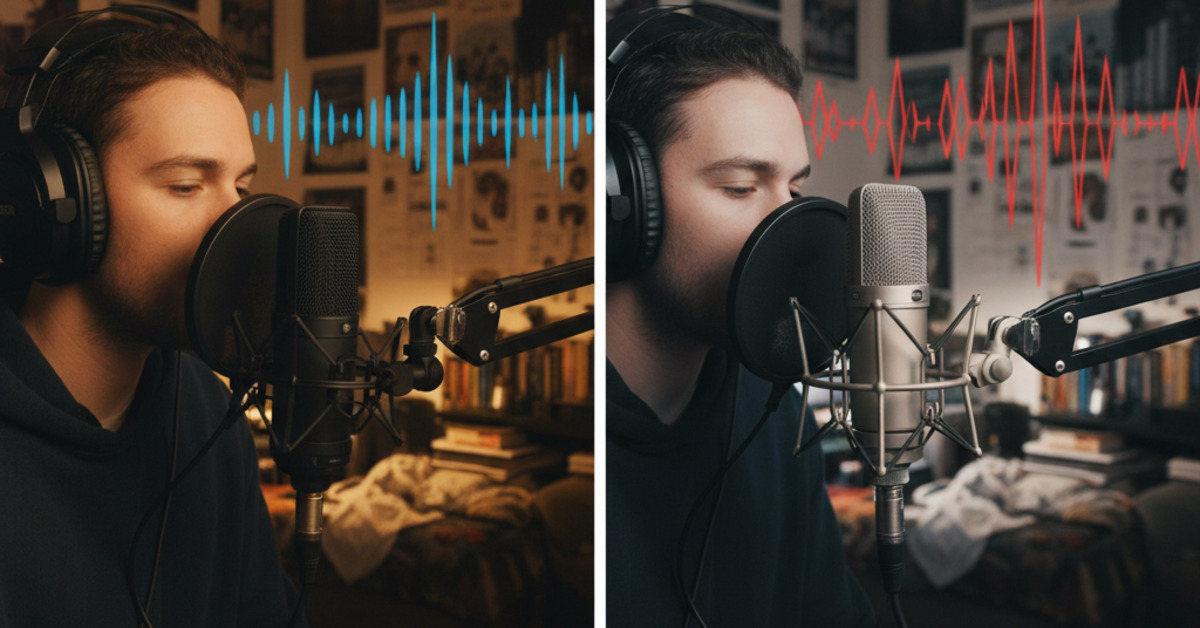
Dynamic vs. Condenser Mics: Which is Best for Untreated Rooms?
When you're setting up a home recording studio, one of the most important decisions you'll make is which microphone to choose. There are two main types of microphones: dynamic and condenser. Both have their own strengths and weaknesses, but which one is the best choice for an untreated room?
What is an Untreated Room?
An untreated room is a room that has not been acoustically treated to control sound reflections. This can result in a number of problems, including:
- Echo: Sound waves bouncing off of hard surfaces, such as walls and ceilings.
- Reverb: A series of echoes that combine to create a sense of spaciousness.
- Background noise: Unwanted sounds from outside of the recording space.
Dynamic Microphones
Dynamic microphones are rugged and durable microphones that are often used in live sound applications. They are less sensitive than condenser microphones, which makes them a good choice for recording in noisy environments.
Pros:
- Durable and rugged.
- Less sensitive to background noise.
- Do not require phantom power.
- Affordable.
Cons:
- Less detailed and accurate than condenser microphones.
- Not as good at capturing high-frequency sounds.
Condenser Microphones
Condenser microphones are more sensitive and delicate than dynamic microphones. They are often used in studio recording applications because they are very good at capturing detail and nuance.
Pros:
- More detailed and accurate than dynamic microphones.
- Better at capturing high-frequency sounds.
- Wide frequency response.
Cons:
- More sensitive to background noise.
- Require phantom power.
- More fragile than dynamic microphones.
- More expensive than dynamic microphones.
Which is Best for an Untreated Room?
For recording in an untreated room, a dynamic microphone is generally the better choice. Because dynamic microphones are less sensitive than condenser microphones, they are less likely to pick up unwanted background noise and room reflections. This will result in a cleaner and more professional-sounding recording.
However, there are a few exceptions to this rule. If you're recording a quiet sound source, such as a podcast or a voiceover, a condenser microphone may be a better choice. The extra sensitivity of a condenser microphone will allow you to capture a more detailed and nuanced recording.
Tips for Recording in an Untreated Room
Whether you choose a dynamic or a condenser microphone, there are a few things you can do to improve the quality of your recordings in an untreated room:
- Get close to the microphone: The closer you are to the microphone, the less background noise it will pick up.
- Use a pop filter: A pop filter will help to reduce plosives, which are the blasts of air that are created when you say words with "p" and "b" sounds.
- Use a reflection filter: A reflection filter is a device that you can place behind your microphone to help to absorb sound reflections.
- Hang blankets or other soft materials on the walls: This will help to absorb sound and reduce echo.
The Bottom Line
For recording in an untreated room, a dynamic microphone is generally the better choice. However, a condenser microphone can also be a good option for recording quiet sound sources. By following these tips, you can get a great-sounding recording, even in a less-than-ideal recording space.