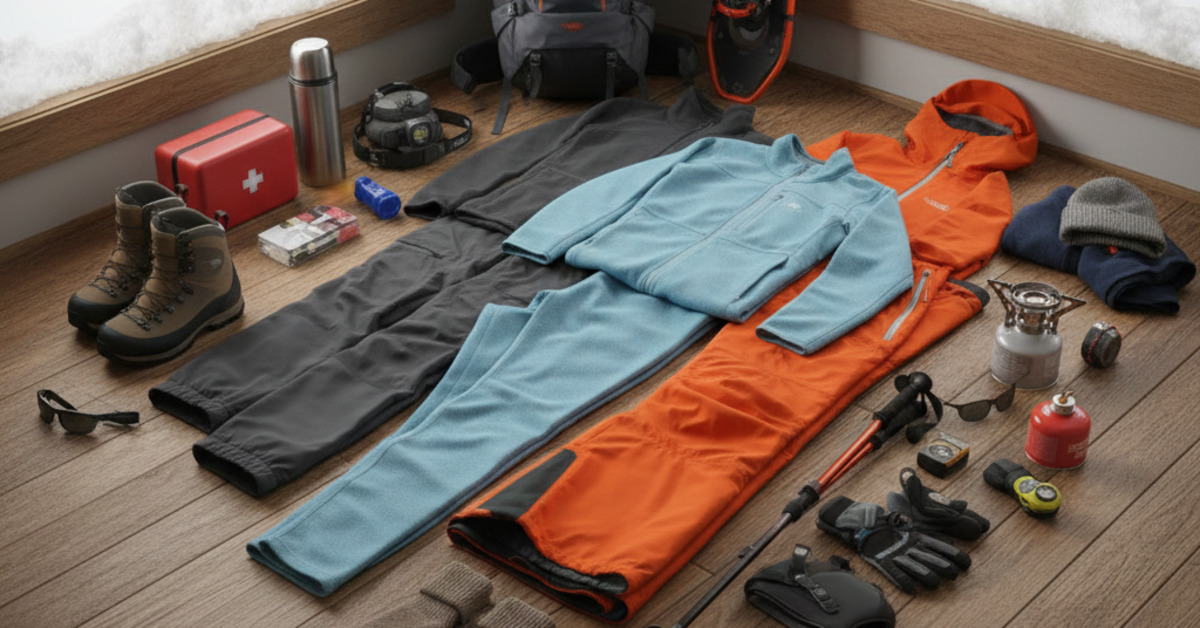
10 Essentials for Winter Hiking (Layering Guide)
Winter hiking can be a magical experience. The crowds are gone, the air is crisp, and the snow-covered landscape is breathtaking. But winter hiking also comes with its own unique set of challenges. The cold, the snow, and the ice can be dangerous if you're not prepared. That's why it's so important to have the right gear. In this guide, we'll show you the 10 essential items you need for a safe and comfortable winter hike.
1. The Right Layers
Layering is the key to staying warm and comfortable in the winter. By wearing multiple layers, you can easily adjust your clothing to match the changing conditions.
- Base Layer: The base layer is the layer of clothing that is closest to your skin. It should be made of a moisture-wicking material, such as merino wool or synthetic fabric.
- Mid Layer: The mid layer is the insulating layer. It should be made of a warm material, such as fleece or down.
- Outer Layer: The outer layer is the protective layer. It should be waterproof and windproof to protect you from the elements.
2. Winter Hiking Boots
A good pair of winter hiking boots is essential for keeping your feet warm and dry. Look for boots that are waterproof, insulated, and have a good grip.
3. Socks
The right socks are just as important as the right boots. Look for socks that are made of a moisture-wicking material, such as merino wool.
4. Hat and Gloves
A warm hat and a good pair of gloves are essential for protecting your head and hands from the cold.
5. Navigation Tools
A map, a compass, and a GPS device are essential for navigating in the winter. The snow can make it difficult to see the trail, so it's important to have reliable navigation tools.
6. Headlamp
The days are shorter in the winter, so it's a good idea to carry a headlamp with you in case you get caught on the trail after dark.
7. Sunscreen and Sunglasses
The sun can be surprisingly strong in the winter, especially when it's reflecting off of the snow. Make sure you have sunscreen and sunglasses to protect your skin and eyes.
8. First-Aid Kit
A first-aid kit is an essential item for any hike, but it's especially important in the winter. Make sure your first-aid kit is well-stocked with bandages, antiseptic wipes, and other supplies.
9. Food and Water
It's important to stay hydrated and fueled on a winter hike. Bring plenty of water and high-energy snacks, such as granola bars and nuts.
10. Emergency Shelter
An emergency shelter, such as a bivy sack or a space blanket, can be a lifesaver if you get stranded on the trail overnight.
The Bottom Line
Winter hiking can be a safe and enjoyable experience if you're prepared. By dressing in layers and carrying the 10 essentials, you can stay warm, dry, and safe on the trail.