Zigbee vs. Z-Wave: Which is Better for Smart Homes?
If you're just starting to build a smart home, you've probably come across the terms "Zigbee" and "Z-Wave." These are two of the most popular wireless protocols for smart home devices. But what's the difference between the two, and which one is better? In this guide, we'll break down the pros and cons of each to help you to decide which one is right for your smart home.
What are Zigbee and Z-Wave?
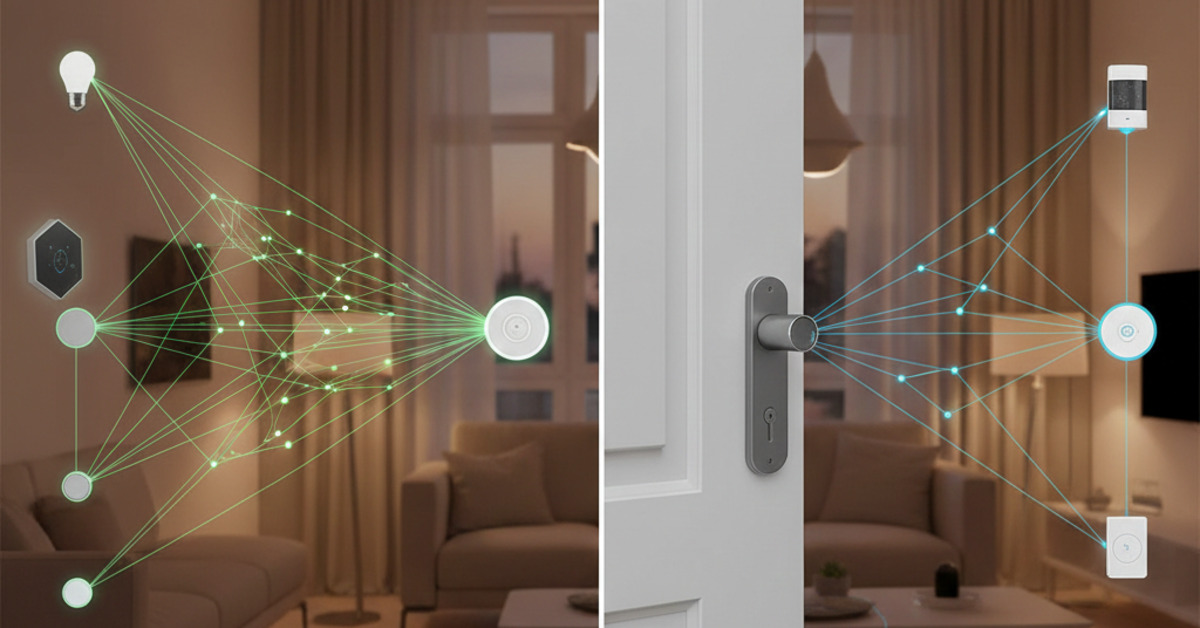
Zigbee and Z-Wave are both wireless protocols that allow smart home devices to communicate with each other. They are both mesh networks, which means that each device in the network can communicate with every other device in the network. This creates a more reliable and robust network than a traditional Wi-Fi network.
Zigbee
Zigbee is an open-source wireless protocol that is used by a wide variety of smart home devices.
Pros:
- Open standard: Because Zigbee is an open standard, any manufacturer can create a Zigbee-compatible device. This has led to a wide variety of Zigbee devices being available at a variety of price points.
- Faster speeds: Zigbee is generally faster than Z-Wave.
- Lower power consumption: Zigbee devices typically have a longer battery life than Z-Wave devices.
Cons:
- Can be less reliable: Because Zigbee is an open standard, there can be some compatibility issues between different brands of Zigbee devices.
- Can be more susceptible to interference: Zigbee operates on the same 2.4GHz frequency as Wi-Fi, which can sometimes lead to interference.
Z-Wave
Z-Wave is a proprietary wireless protocol that is owned by a single company, Silicon Labs.
Pros:
- More reliable: Because Z-Wave is a proprietary protocol, all Z-Wave devices are certified to work together. This makes for a more reliable and stable network.
- Less susceptible to interference: Z-Wave operates on a different frequency than Wi-Fi, so it's less likely to experience interference.
Cons:
- Closed standard: Because Z-Wave is a closed standard, there are fewer Z-Wave devices available than Zigbee devices.
- Slower speeds: Z-Wave is generally slower than Zigbee.
- Higher power consumption: Z-Wave devices typically have a shorter battery life than Zigbee devices.
Which One Should You Choose?
The right choice for you will depend on your individual needs and preferences.
- Choose Zigbee if: You're on a budget and you want a wide variety of devices to choose from.
- Choose Z-Wave if: You're looking for a more reliable and stable network.
The Hub
Regardless of whether you choose Zigbee or Z-Wave, you'll need a smart home hub to control your devices. The hub is the brain of your smart home, and it allows you to connect and automate all of your devices. Some popular smart home hubs that support both Zigbee and Z-Wave include the Amazon Echo Plus, the Samsung SmartThings Hub, and the Hubitat Elevation.
The Bottom Line
Both Zigbee and Z-Wave are great choices for building a smart home. The best way to decide which one is right for you is to consider your individual needs and preferences. If you're on a budget and you want a wide variety of devices to choose from, Zigbee is a great choice. If you're looking for a more reliable and stable network, Z-Wave is a better option.