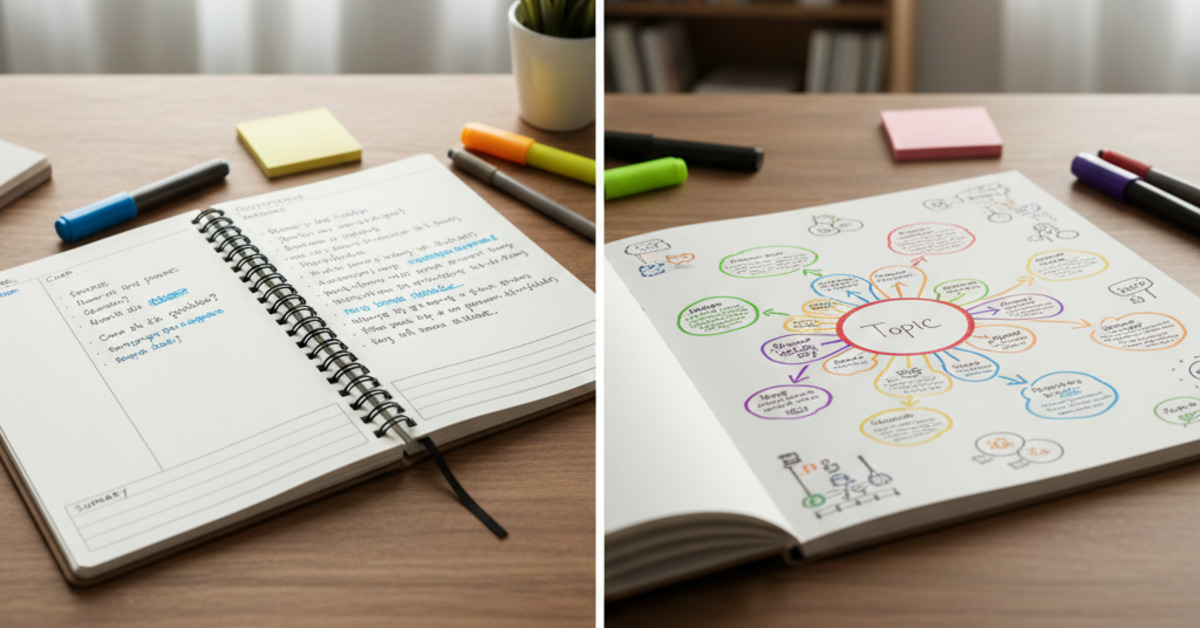
Note-Taking Systems: Cornell Method vs. Mind Mapping
Taking good notes is one of the most important skills you can have as a student. Good notes will help you to stay engaged in class, remember what you've learned, and prepare for exams. But not all note-taking systems are created equal. In this guide, we'll compare two of the most popular note-taking systems: the Cornell Method and mind mapping.
The Cornell Method
The Cornell Method is a note-taking system that was developed by Walter Pauk, a professor at Cornell University. It's a simple and effective system that can be used for any subject.
How it Works:
- Divide your paper into three sections: A main notes section, a cues section, and a summary section.
- Take notes in the main notes section: During class, take notes in the main notes section.
- Write cues in the cues section: After class, review your notes and write cues in the cues section. Cues are keywords or questions that will help you to remember the information in your notes.
- Write a summary in the summary section: At the bottom of the page, write a brief summary of the information on the page.
Pros:
- Encourages active listening.
- Helps you to identify the main ideas.
- Makes it easy to review your notes.
Cons:
- Can be a bit rigid.
- May not be a good choice for visual learners.
Mind Mapping
Mind mapping is a visual note-taking system that involves creating a diagram of your notes.
How it Works:
- Start with a central idea: In the center of the page, write down the main idea of the lecture.
- Branch out with related ideas: From the central idea, branch out with related ideas.
- Use keywords, images, and colors: Use keywords, images, and colors to make your mind map more engaging and memorable.
Pros:
- Great for visual learners.
- Helps you to see the big picture.
- Can be a fun and creative way to take notes.
Cons:
- Can be a bit messy and disorganized.
- May not be a good choice for linear thinkers.
The Verdict
So, which note-taking system is right for you?
- Choose the Cornell Method if: You're a linear thinker who likes a structured and organized note-taking system.
- Choose mind mapping if: You're a visual learner who likes a more creative and flexible note-taking system.
The Bottom Line
The best note-taking system is the one that works for you. By experimenting with different systems, you can find a note-taking system that will help you to take better notes and succeed in your studies.