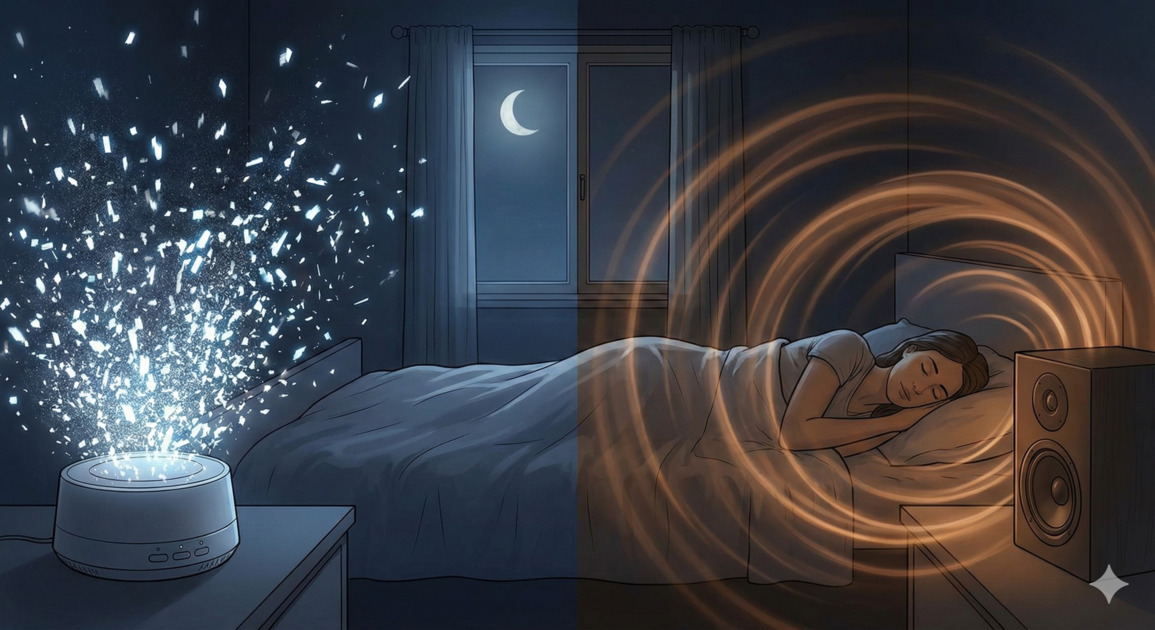
Brown Noise vs. White Noise: Which is Better for Deep Sleep?
If you struggle to fall asleep or stay asleep, you have likely turned to a sound machine or a phone app for help. For decades, "white noise" was the gold standard for masking disruptive sounds—a barking dog, a snoring partner, or city traffic.
Recently, however, a deeper contender has gained massive popularity, especially on social media platforms like TikTok: brown noise. Many users claim it is vastly superior for quieting a racing mind and inducing deeper rest.
But is it just a trend, or is there science behind the sound? Understanding the difference between these "sound colors" is key to curating your perfect sleep environment.
The Classic: What is White Noise?
To understand colored noise, you have to understand frequencies. White noise is a signal that contains all audible frequencies playing at the same intensity level.
Because it covers the entire spectrum of sound equally, it creates a uniform "wall of sound." This is excellent for blocking out sudden changes in noise in your environment. The classic examples of white noise are untuned static on an old television, a whirring fan, or a running air conditioner.
The Downside: Because white noise includes high frequencies at the same volume as low ones, it can sound "tinny" or sharp. Many people sensitive to high-pitched sounds find themselves asking, "does white noise sound too harsh to actually relax to?" For some, that "hiss" is more irritating than soothing.
The Contender: What is Brown Noise?
Brown noise (named after Robert Brown, who discovered Brownian motion, not the color) takes a different approach. Like white noise, it uses many frequencies, but it turns the volume down significantly on the high end and pumps up the bass.
This results in a much deeper, rumbling sound. It lacks the high-pitched hiss of white noise entirely. This is why brown noise sounds deeper and more enveloping to the human ear.
The best natural examples of brown noise are soothing low frequency sounds for sleep: a roaring waterfall, distant thunder, or heavy ocean surf crashing on the shore. It feels heavier and more grounding than white noise.
The Verdict: Which is Best for Deep Sleep?
When trying to determine the best color noise for insomnia or restless sleep, it often comes down to personal auditory sensitivity.
While white noise is fantastic at masking external sounds because it covers every frequency, its harshness can sometimes prevent your brain from fully entering deep, restorative sleep stages.
Brown noise is often better for sustaining sleep. Because it is softer and deeper, the brain habituates to it more easily. It provides a comforting blanket of sound without the abrasive high notes that might subtly alert your nervous system. If you have ADHD or a racing mind, the deep rumble of brown noise is often reported to be more effective at "quieting thoughts."
The Middle Ground: Pink Noise
It is worth noting that there is a middle ground. If white is too high, and brown is too low, pink noise is the balance. Understanding the technical difference between pink white and brown noise for sleeping is simple: Pink noise sounds like steady rain; it has reduced high frequencies compared to white, but isn't as deep as brown.
Ultimately, the best sound for sleep is the one that helps you relax. If you find standard static irritating, it is time to switch your sound machine to the deeper end of the spectrum and give brown noise a try.