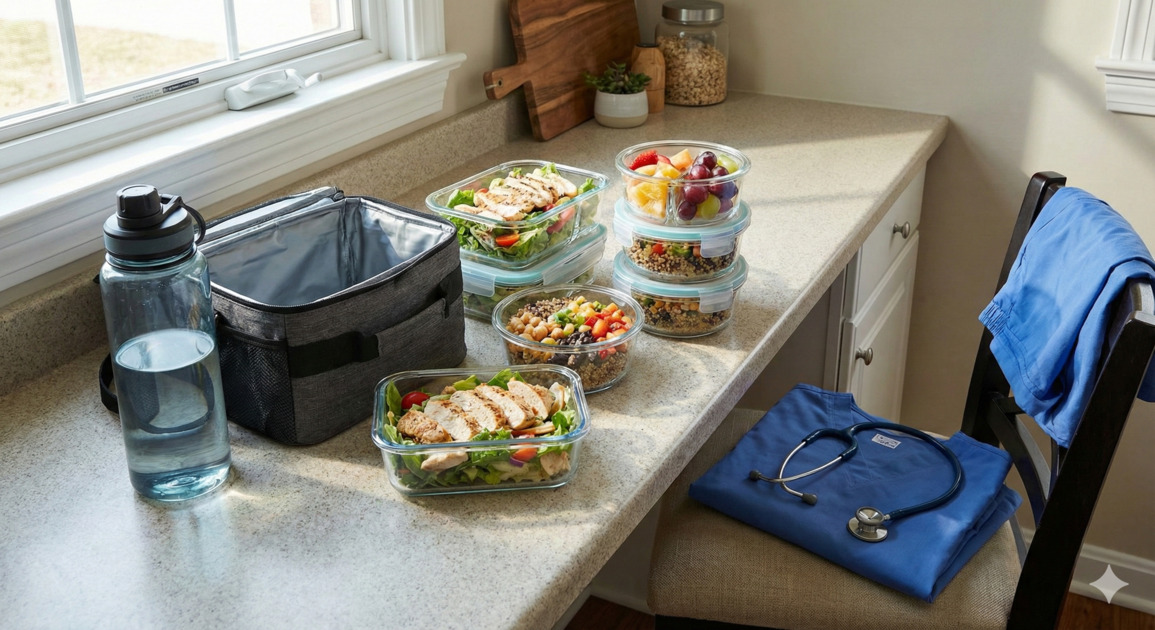
Life-Saving Meal Prep Ideas for 12-Hour Shift Nurses
Working a 12-hour shift is a marathon, not a sprint. As a nurse, you spend your day caring for others, often forgetting to care for yourself. The reality of nurse shift work nutrition is often a sad story of vending machine snacks, cold coffee, and cafeteria food that leaves you feeling sluggish.
When you're on your feet for twelve hours straight, proper nutrition isn't just about staying fit; it's about maintaining the mental clarity and physical energy required to keep your patients safe. The solution? Strategic meal prepping.
Here is a practical guide to mastering meal prep, designed specifically for the chaotic schedule of a 12-hour shift nurse.
The Strategy: Batch Cooking is Your Best Friend
On your days off, the last thing you want to do is spend hours in the kitchen. The key to sustainable nurse meal prep for 12-hour shifts is efficiency.
Focus on batch cooking for busy nurses. Instead of making five different complex meals, choose two or three versatile protein sources (like grilled chicken, roasted tofu, or hard-boiled eggs) and a couple of carbohydrate bases (like quinoa, brown rice, or roasted sweet potatoes).
Cook large quantities of these staples at once. Then, you can mix and match them throughout the week with different sauces and fresh vegetables to create variety without the extra work.
The "Main Event": Easy Packable Lunches for Nurses
Your main meal needs to be something that holds up well in a fridge for a few days and doesn't require complex reheating—sometimes you only have 15 minutes!
- Adult "Lunchables": Ditch the processed version. Create your own bento box with whole-grain crackers, slices of high-quality cheese, turkey or hummus, grapes, and cucumber slices. It’s one of the most easy packable lunches for nurses because it requires zero heating.
- Mason Jar Salads: Layering is key. Put the dressing at the bottom, followed by hearty vegetables like carrots and peppers, then your protein and grains, and finally the leafy greens on top. When you're ready to eat, just shake it up. The greens stay crisp, not soggy.
- Hardy Grain Bowls: A scoop of quinoa topped with roasted chickpeas, roasted broccoli, a sprinkle of feta, and a tahini dressing is a nutrient-dense meal that tastes great warm or cold.
Don't Forget the Snacks: Fueling the Mid-Shift Slump
Around hour eight, your energy will inevitably dip. Relying on sugary hospital snacks leads to a crash later. You need healthy snacks for 12-hour shifts that provide sustained energy.
- Protein-Packed Pairings: An apple with peanut butter, a handful of almonds with a cheese stick, or Greek yogurt with berries. The combination of protein, healthy fats, and fiber will keep your blood sugar stable.
- Hydration Helpers: Sometimes hunger is actually dehydration. Keep a large water bottle with you. For a flavor boost, add lemon slices or cucumber.
A Note on Night Shifts
Meal prep for night shift nurses comes with its own challenges, as your circadian rhythm is flipped. Try to eat your main "heavy" meal before your shift starts. During the night, focus on lighter, easily digestible meals and snacks to avoid digestive discomfort at 3 AM.
By investing just a couple of hours on a day off into smart meal prepping, you are investing in a better, more energized, and less stressful work week. Your body—and your patients—will thank you.