How to Soundproof a Home Office on a Budget
Working from home offers freedom, but it also comes with a unique set of challenges—namely, noise. Whether it’s a barking dog, loud traffic, or family members going about their day, unwanted sound can shatter your concentration and ruin important video calls.
Professional soundproofing involves tearing down walls and spending thousands of dollars. Fortunately, you don't need a recording studio-level setup to make a significant difference. By targeting the main entry points for noise, you can create a quieter sanctuary on a shoestring budget.
Here is a practical guide to soundproofing a home office on a budget.
1. Seal the Biggest Culprit: The Door
The interior door is usually the weakest link in any room's sound defense. Most interior doors are hollow cores with large gaps around the frame, offering little more sound resistance than a piece of cardboard.
- The Gap Underneath: The largest space for sound to enter is the gap between the bottom of the door and the floor. A simple, adhesive rubber or silicone door sweep is an incredibly effective and cheap solution. Stick it to the bottom of the door to create a seal against the floor.
- The Frame Gaps: Sound behaves like water; if there's a hole, it will get through. Use affordable adhesive weatherstripping tape around the top and sides of the door frame. This compresses when the door closes, creating a much tighter seal. These two steps alone for soundproofing an interior door cheap can make a surprising difference.
2. Tackle Window Noise
If traffic or neighborhood noise is your main issue, your windows are likely to blame.
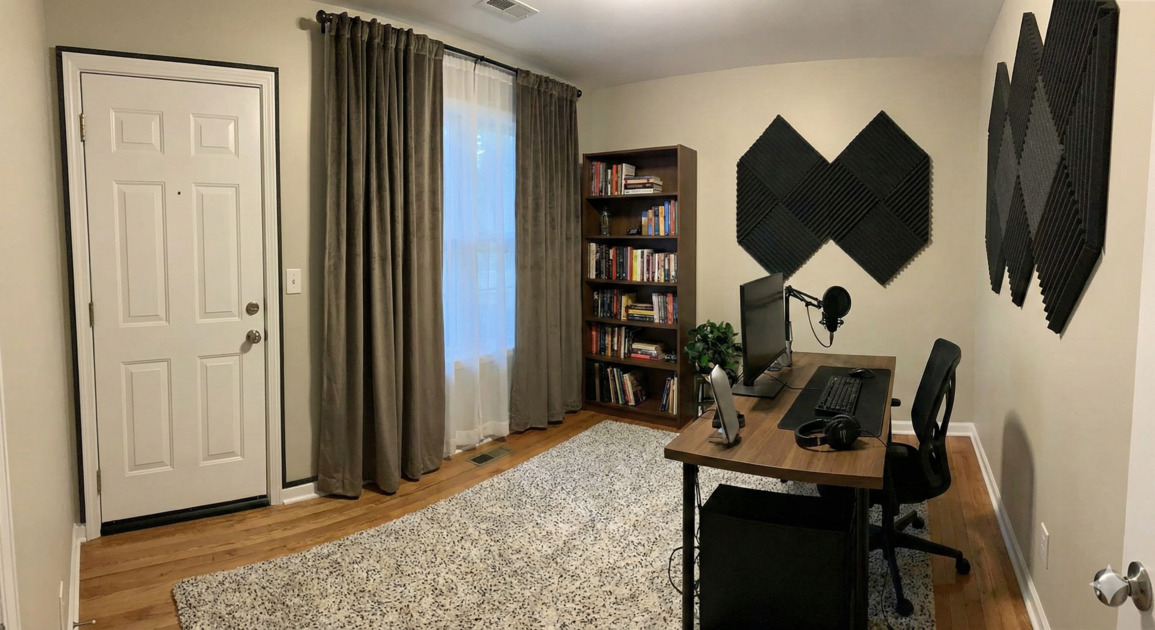
- Heavy Curtains: Forget thin blinds. Invest in heavy, thick "blackout" or thermal curtains. The denser the fabric, the better it will absorb sound. For maximum effect, ensure the curtains extend well past the window frame on all sides and go all the way to the floor.
- Seal the Cracks: Just like with doors, check your window frames for old, cracked caulking. A cheap tube of acoustic sealant can patch these tiny gaps where exterior noise sneaks in. These are simple DIY window soundproofing ideas that cost very little.
3. Add "Softness" to Hard Surfaces
Hard surfaces like bare walls, hardwood floors, and empty desks reflect sound waves, creating echoes and making a room feel noisier. To dampen sound, you need to add mass and soft materials to absorb it.
- Cover the Floor: If you have hard flooring, a thick area rug with a dense rug pad underneath is essential. It absorbs footsteps and reduces echo.
- Furnish the Walls: Empty walls are echo chambers. Adding bookshelves filled with books creates mass that helps block sound transfer. For a more direct approach, you can buy affordable acoustic foam panels online. While not professional-grade, placing a few tiles at "reflection points" (where sound bounces) serves as a cheap acoustic treatment for home office spaces that cuts down on reverb.
By taking a layered approach and addressing these common weak points, you can significantly lower the noise floor in your office without emptying your wallet.