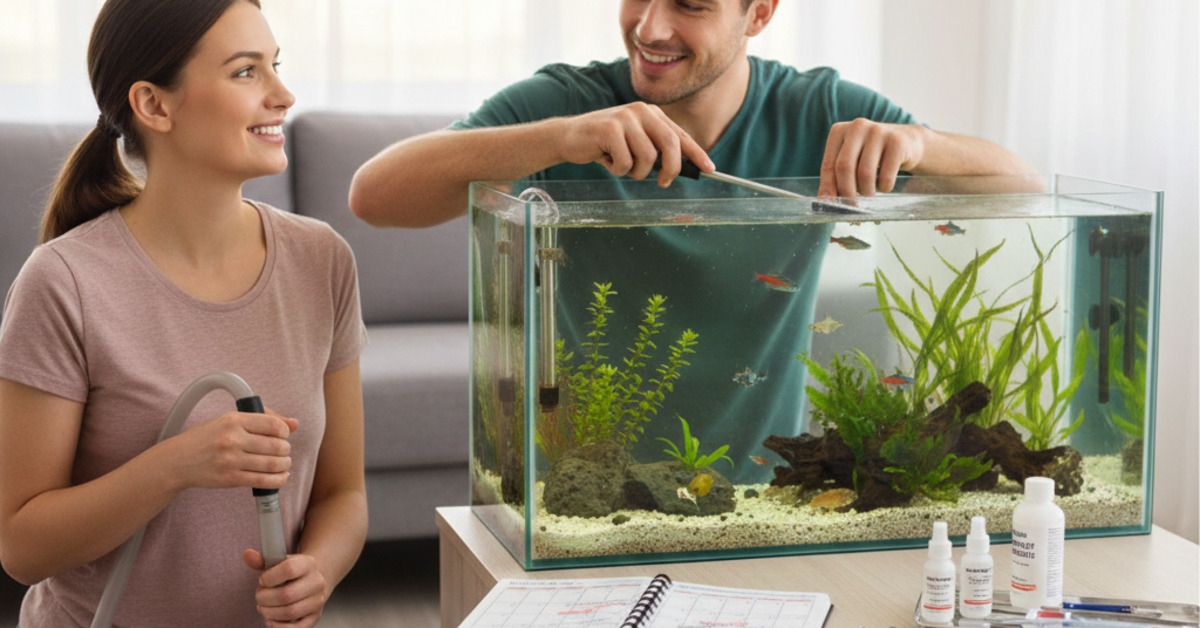
The Secret to a Thriving Aquarium
Setting up a new aquarium is exciting, but the real secret to a vibrant, healthy fish tank is consistent maintenance. An aquarium is a closed ecosystem, and without regular care, waste products can build up to toxic levels, harming your fish. While it might sound intimidating, beginner fish tank care is straightforward once you get into a routine.
This simple aquarium maintenance schedule breaks down the essential tasks into a manageable weekly and monthly fish tank checklist.
Daily Tasks (2-3 Minutes)
These are quick visual checks to ensure everything is running smoothly.
- Feed Your Fish: Feed them once or twice a day, but only give them an amount they can completely consume in 2-3 minutes. Overfeeding is one of the most common beginner mistakes and leads to excess waste.
- Check the Filter: Is the filter running properly? Is water flowing out at a normal rate?
- Check the Temperature: A quick glance at the thermometer will confirm that your heater is working correctly and the water is at the right temperature for your fish.
- Do a Headcount: Check on all your fish. Do they look healthy and active? Are there any signs of illness or stress?
Weekly Tasks (20-30 Minutes)
This is your main cleaning and maintenance session. Pick a day of the week and stick to it.
1. The Partial Water Change (The Most Important Task) You should never change all the water in your tank at once, as this can destroy the beneficial bacteria that keep your ecosystem stable. A partial aquarium water change is essential.
- Action: Siphon out 20-25% of the water from your tank using a gravel vacuum. As you siphon, move the vacuum through the gravel to suck up fish waste, uneaten food, and other debris.
- Refill: Treat fresh tap water with a water conditioner (dechlorinator) to remove harmful chlorine. Ensure the new water is the same temperature as the tank water, then slowly pour it in.
2. Clean the Glass
- Action: Use an algae scraper or a mag-float cleaner to scrub any algae off the inside of the aquarium glass. Do this before you remove the water so the floating algae gets siphoned out.
3. Check Your Water Parameters
- Action: Use a liquid test kit (like the API Freshwater Master Test Kit) to test for ammonia, nitrite, and nitrate.
- Ammonia and Nitrite should ALWAYS be at 0 ppm in a cycled tank.
- Nitrate should be below 40 ppm (a water change helps lower this).
- Regular testing is a crucial part of how to clean a fish tank ecosystem, not just the physical tank.
Monthly Tasks (30-45 Minutes)
These tasks are done in addition to your regular weekly maintenance.
1. Filter Maintenance Your filter cartridge or media is home to most of your tank's beneficial bacteria. Never replace it all at once!
- Action: Take the filter cartridge, sponge, or ceramic media out of the filter.
- Crucial Step: During your water change, take the bucket of old tank water you siphoned out and rinse the filter media in that water. Swish it around to dislodge gunk and debris.
- Why: Rinsing it in tap water will kill the beneficial bacteria due to the chlorine. By using the old tank water, you preserve the bacteria colony while cleaning the filter.
- When to Replace: Only replace a filter cartridge when it is literally falling apart. Even then, it's best to run the old and new cartridge together for a few weeks to seed the new one with bacteria.
2. Prune Live Plants
- Action: If you have live plants, trim any dead or yellowing leaves to promote new growth and reduce waste in the tank.
By following this consistent weekly aquarium tasks and monthly fish tank cleaning routine, you will create a stable, healthy environment where your fish can not only survive but truly flourish.