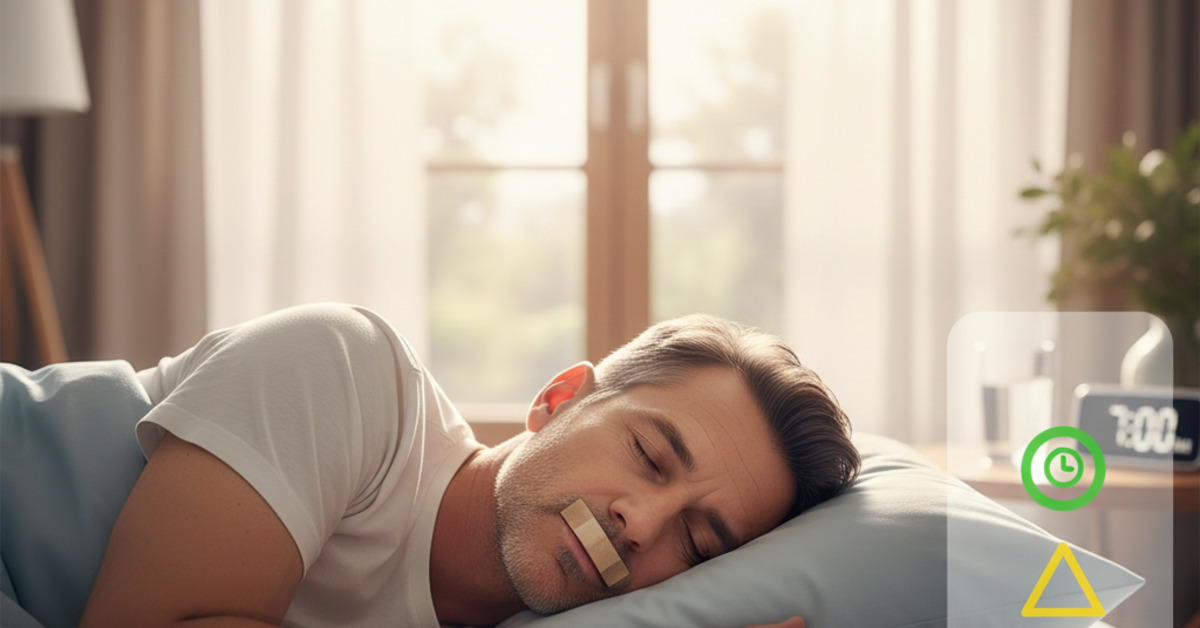
The Unlikely Wellness Trend: Taping Your Mouth Shut
It sounds bizarre, even a little scary, but mouth taping for sleep is a wellness practice that's gaining significant attention, and for good reason. The goal isn't to prevent breathing, but rather to encourage it through the nose. While we can breathe through both our nose and mouth, they are designed for very different purposes, and defaulting to mouth breathing at night can lead to a host of problems.
This guide will explain the benefits of nasal breathing, the downsides of mouth breathing, and how you can safely experiment with mouth taping to improve your sleep.
Disclaimer: This is for informational purposes only. Consult with a doctor before trying mouth taping, especially if you have sleep apnea, asthma, or any difficulty with nasal breathing.
Why Nasal Breathing is Superior
Our noses are sophisticated air filters, designed to do things our mouths simply cannot.
- It Humidifies and Warms Air: The nasal passages warm and moisturize the air you breathe, making it less irritating to your throat and lungs.
- It Filters Air: Your nasal hairs and mucous membranes act as a filter, trapping dust, allergens, and other airborne particles before they reach your lungs.
- It Increases Nitric Oxide: This is a huge benefit. Your nasal sinuses produce nitric oxide, a vasodilator that, when carried to the lungs, helps to improve oxygen circulation throughout your body. Increased nitric oxide is linked to better blood pressure, reduced inflammation, and improved brain function.
The Problem with Mouth Breathing at Night
When you stop mouth breathing and switch to your nose, you avoid the issues associated with breathing through your mouth for 8 hours.
- Dry Mouth and Bad Breath: Constant airflow through the mouth dries up saliva, which is your mouth's natural defense against bacteria. This leads to an overgrowth of bacteria, causing bad breath and increasing the risk of cavities.
- Increased Snoring: Mouth breathing can cause the soft tissues at the back of your throat to vibrate, leading to or worsening snoring.
- Lower Quality Sleep: Mouth breathing is often shallower and less efficient, which can lead to lower oxygen saturation and more fragmented, less restful sleep.
How to Try Mouth Taping Safely
If you're ready to see if mouth taping can help you reduce snoring naturally and how to sleep better, safety must be your top priority.
1. Use the Right Tape.
- DO NOT use duct tape or any other industrial tape.
- DO USE a light, porous medical tape or surgical tape specifically designed for skin (like 3M Micropore tape). There are also specialty "mouth strips" (like Somnifix) designed for this purpose. The goal is for the tape to be easily removable with just the force of opening your mouth.
2. The "X" Method is Not Ideal.
- Many people suggest making an "X" with the tape over their lips. It's safer to use a single, small vertical strip of tape right in the center of your lips, connecting the area just above and below your mouth. This gently encourages your lips to stay closed but can be opened easily if needed.
3. Test it First.
- Before you go to sleep, put the tape on for 10-15 minutes while you're awake and reading a book. Get used to the feeling and confirm you can breathe comfortably through your nose. If you feel any sense of panic or air hunger, take it off immediately. Your nasal passages must be clear.
4. The Goal Isn't to Seal Your Mouth Shut.
- The purpose of the tape is to be a gentle reminder to your jaw and lips to stay closed. It's a training tool, not a restraint.
For many, mouth taping is a simple, low-cost hack that leads to deeper, more restorative sleep, less snoring, and a healthier mouth. By promoting the body's natural and superior breathing mechanism, it's a powerful tool in your sleep hygiene arsenal.