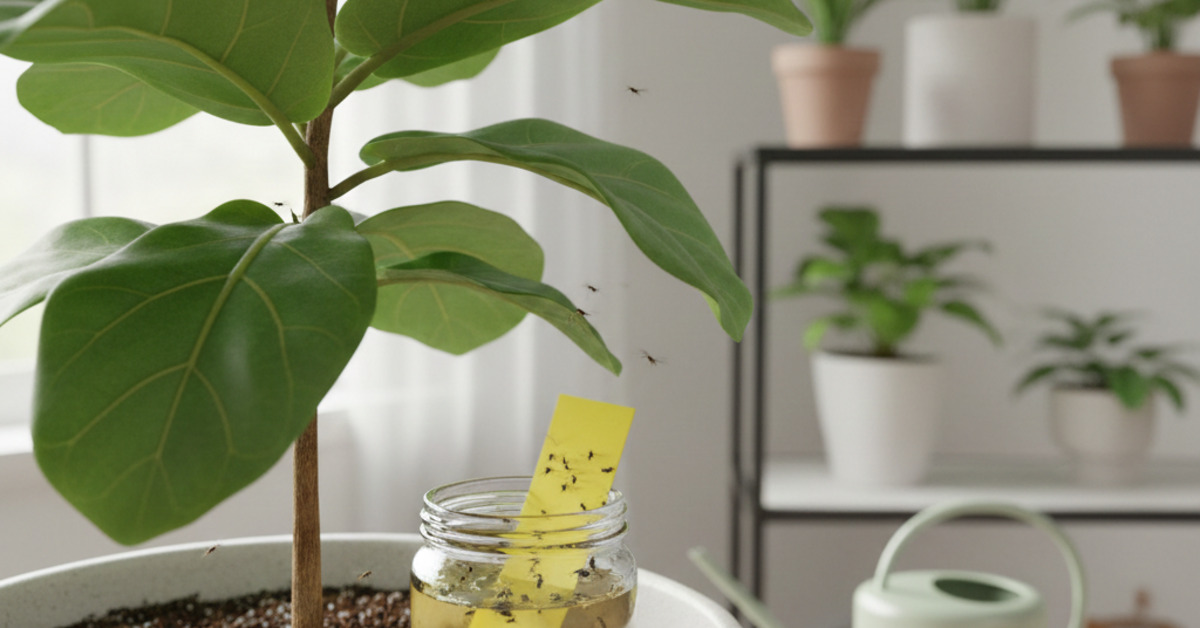
The Annoying Houseplant Guest That Won't Leave
If you own houseplants, you've likely encountered the fungus gnat. These tiny, black, fruit-fly-like insects are a common nuisance. While the adult gnats are mostly just annoying—flying in your face and around your screens—the real problem lies unseen in the soil. Their larvae feed on organic matter and the delicate roots of your plants, which can cause significant damage to seedlings and sensitive plants.
The good news is that you don't need harsh chemical pesticides to solve the problem. You can get rid of fungus gnats effectively and permanently by using a multi-pronged, natural pest control approach that targets both the adults and the larvae.
Step 1: Target the Adults with Sticky Traps
The first step is to reduce the population of adult gnats to prevent them from laying more eggs.
- What to Use: Yellow sticky traps. Fungus gnats are attracted to the color yellow.
- How to Use Them: Place these small, sticky paper traps on stakes directly in the soil of your infested plants. You can also lay them flat on the soil surface. You will be horrified and satisfied by how many adult gnats you catch in just a few days. This is your frontline defense.
Step 2: Target the Larvae in the Soil
Catching the adults is only half the battle. You must also eliminate the fungus gnat larvae living in the top layer of the soil.
Method A: Let the Soil Dry Out
- Why it Works: Fungus gnat larvae need consistently moist soil to survive. The number one cause of a fungus gnat infestation is overwatering.
- How to Do It: Allow the top 1-2 inches of your plant's soil to dry out completely between waterings. This creates an inhospitable environment for the larvae and stops the life cycle in its tracks. For most plants, this is a healthier watering practice anyway.
Method B: Use Diatomaceous Earth
- What it is: Diatomaceous earth is a fine powder made from the fossilized remains of tiny aquatic organisms. To us, it feels like a soft powder, but on a microscopic level, it's incredibly sharp.
- How it Works: When larvae and other soft-bodied insects crawl over it, it shreds their exoskeletons, causing them to dehydrate and die. It is completely non-toxic to humans and pets.
- How to Use It: Sprinkle a thin layer of food-grade diatomaceous earth over the entire surface of the dry soil. It must be dry to be effective.
Step 3: Change Your Watering Habits (The Long-Term Solution)
To keep fungus gnats from ever coming back, you need to change the environment they love.
- Master the Art of Bottom Watering: Instead of pouring water on the topsoil, try how to bottom water plants.
- How to Do It: Place your potted plant (it must have a drainage hole) in a tray or sink filled with a few inches of water. Let the plant sit for 15-20 minutes to soak up water from the bottom up. The roots get the water they need, while the top layer of the soil remains dry, making it a terrible place for gnats to lay their eggs.
- Use Well-Draining Soil: When you repot plants, make sure to use a high-quality potting mix with plenty of perlite or pumice to ensure good aeration and prevent waterlogging.
By combining these three steps—trapping the adults, killing the larvae, and maintaining dry topsoil—you can win the war against fungus gnats and keep your beautiful houseplants healthy and pest-free.