The Ultimate Analog Tool for a Digital World
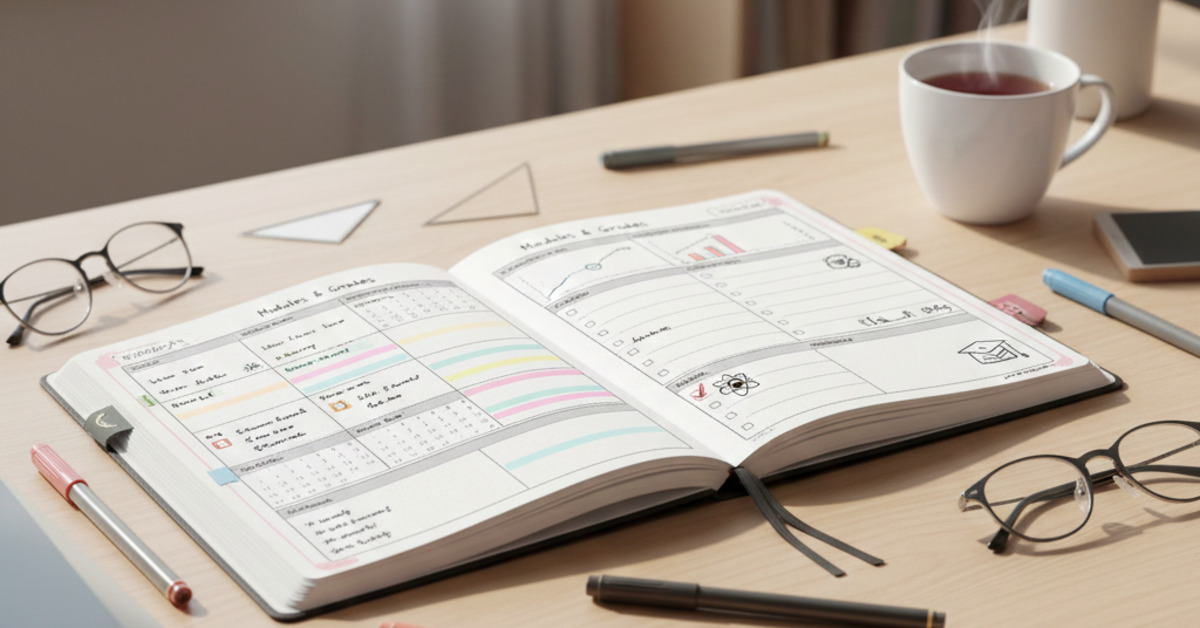
As a student, you're juggling a dozen different things at once: class schedules, assignment due dates, study sessions, extracurriculars, and a social life. While there are plenty of digital apps to help, sometimes the most effective way to quiet the chaos is with a simple notebook and a pen. This is the magic of the bullet journal for students.
A bullet journal (or "bujo") is a completely customizable planner system. Instead of being confined to a pre-printed layout, you create the layouts—or "spreads"—that you actually need. It's a powerful tool to organize for college and stay on top of your academic life.
Here are some of the most essential and easy-to-create bujo layout ideas for students.
1. The Semester-at-a-Glance Spread
This is a macro-level overview of your entire semester. It's the first thing you should set up.
- The Layout: Create a simple calendar grid for the 4-5 months of your semester. You can draw mini-calendars or just list the months and dates.
- What to Track: Go through each of your course syllabi and mark down the major deadlines and important dates: mid-term exams, final exams, project due dates, and school holidays.
- Why it's useful: It allows you to see your busiest weeks from a mile away and helps you plan for them in advance. No more "surprise" finals week.
2. The Weekly Schedule Spread
This is a more detailed look at your default week.
- The Layout: Create a simple chart with the days of the week across the top and times down the side (e.g., from 8 AM to 10 PM).
- What to Track: Block out your fixed commitments: class times, lab sessions, work hours, and recurring club meetings.
- Why it's useful: It gives you a clear visual of your "free" time, allowing you to see exactly where you can block out time for studying, assignments, and personal time.
3. The Assignment Tracker Spread
This is arguably the most important spread for any student. It's a master list of every single assignment for the entire semester.
- The Layout: Create a simple table with four columns:
- Course: The class the assignment is for.
- Assignment: A brief description (e.g., "Chapter 3 Reading," "History Essay").
- Due Date: The deadline.
- Done: A checkbox to get that satisfying feeling of completion.
- How to Use It: At the beginning of the semester, go through your syllabi and list every single assignment you'll have. You can sort it by date or by course.
- Why it's useful: It prevents things from slipping through the cracks. You have a single source of truth for everything you need to do.
4. The Study Planner Spread
This spread helps you break down large study sessions into manageable chunks.
- The Layout: When you have a big exam coming up, dedicate a page to it. Write the subject at the top, and then list out all the topics or chapters you need to review.
- How to Use It: Use the "Pomodoro Technique." For each topic, draw 3-4 small checkboxes next to it. Each checkbox represents a focused 25-minute study session. When you complete a session, you fill in a box.
- Why it's useful: It makes studying for a huge exam feel less overwhelming. Instead of a vague goal to "study for history," you have a clear, actionable plan: "I will do two 25-minute sessions on Chapter 5 today."
A student planner doesn't need to be an artistic masterpiece. These simple, functional layouts are all you need to take control of your semester. The power of a bullet journal is in its flexibility—use these ideas as a starting point and adapt them to create the perfect organizational system for you.