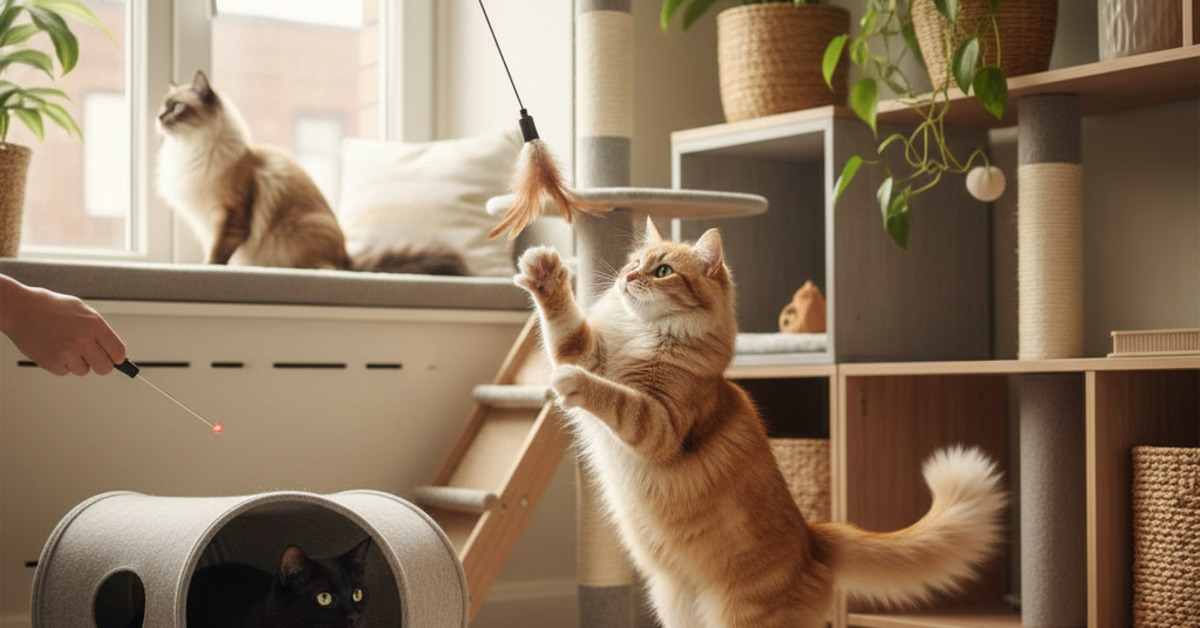
The Indoor Cat's Dilemma: A Big World in a Small Room
Cats are natural-born hunters, explorers, and athletes. In the wild, their days are filled with stalking prey, climbing trees, and patrolling their territory. For an indoor cat, especially one living in a small apartment, that entire world is condensed into a few hundred square feet. Without proper stimulation, this can lead to boredom, which often manifests as destructive behavior, anxiety, or over-grooming.
The key to a happy, healthy cat in a small home is cat enrichment. It's about creating a stimulating environment that allows them to engage their natural instincts. Here's how to keep indoor cats entertained and prevent a bored cat from becoming a problem.
1. Think Vertically: The Power of "Catify-ing"
In a small apartment, floor space is limited, but you have a whole world of vertical space to work with. Cats love to climb and observe their territory from a high vantage point.
- Go High: Install cat shelves, perches, or a tall, sturdy cat tree. A vertical space for cats essentially increases your apartment's square footage from your cat's perspective.
- Window Perches: A secure window perch or hammock is prime real estate. It provides endless entertainment (often called "cat TV") as your cat can watch birds, people, and the world go by.
2. Make Mealtime a Hunt with Puzzle Feeders
In the wild, a cat has to work for its food. We can simulate this "hunt, catch, kill, eat" cycle by making them work for their meals.
- What are they?: Puzzle feeders for cats are toys that you hide kibble or treats inside. The cat has to roll, nudge, or manipulate the toy to get the food out.
- Why it works: It engages their brain, slows down fast eaters, and provides a rewarding challenge. Start with a beginner-level puzzle feeder and gradually increase the difficulty as your cat gets the hang of it. This is one of the most effective cat enrichment ideas.
3. The Power of Interactive Play
You are your cat's favorite toy. Scheduling short, dedicated play sessions every day is crucial for both bonding and exercise.
- Use Wand Toys: Toys with feathers or strings that mimic the movement of birds or mice are irresistible. A "Da Bird" wand toy is a classic for a reason. Let your cat chase, "catch," and "kill" the toy to complete the predatory sequence.
- Rotate Toys: Don't leave all the toys out all the time. Keep a special set of interactive cat toys that only come out when you are playing with them. Rotating other toys every few days keeps them novel and exciting.
4. Engage Their Other Senses
Enrichment isn't just about physical activity; it's also about sensory stimulation.
- Bring the Outdoors In: A small pot of cat grass or catnip provides a safe way for your cat to chew on greens.
- Scent Exploration: Hide a few high-value treats around the room and encourage your cat to use their powerful sense of smell to find them.
- "Cat TV": If you don't have an interesting window, you can play videos for cats on your TV or tablet. Many feature close-up footage of birds and squirrels.
5. Create a "Safe" Outdoor Experience
If your apartment has a secure balcony or patio, you can cat-proof it to create a "catio." This allows your cat to experience the sights, sounds, and smells of the outdoors in a completely safe environment. If not, you might consider harness-training your cat for supervised outdoor adventures.
By implementing these bored cat solutions, you can create a rich, engaging world for your feline friend, no matter the size of your home. A mentally and physically stimulated cat is a happy cat, and a happy cat makes for a happy owner.