Is Your "Healthy" Meal Being Cooked in an Unhealthy Pan?
You take care to buy fresh, healthy ingredients to cook for yourself and your family. But have you ever considered the pan you're cooking in? For decades, the go-to for convenient, easy cleanup has been traditional non-stick cookware. However, growing concerns about the chemicals used in these coatings have led many people to search for non-toxic cookware alternatives.
The primary concern revolves around a class of chemicals called PFAS (per- and polyfluoroalkyl substances), which includes the infamous PFOA and PTFE (best known by the brand name Teflon). When overheated, these coatings can break down and release toxic fumes. Long-term exposure to these "forever chemicals" has been linked to a variety of health problems.
The good news is that there are now many excellent PFAS-free pans and cookware sets that offer a safer—and often, a better—cooking experience.
The Best Safe Cooking Materials
1. Ceramic Coated Cookware
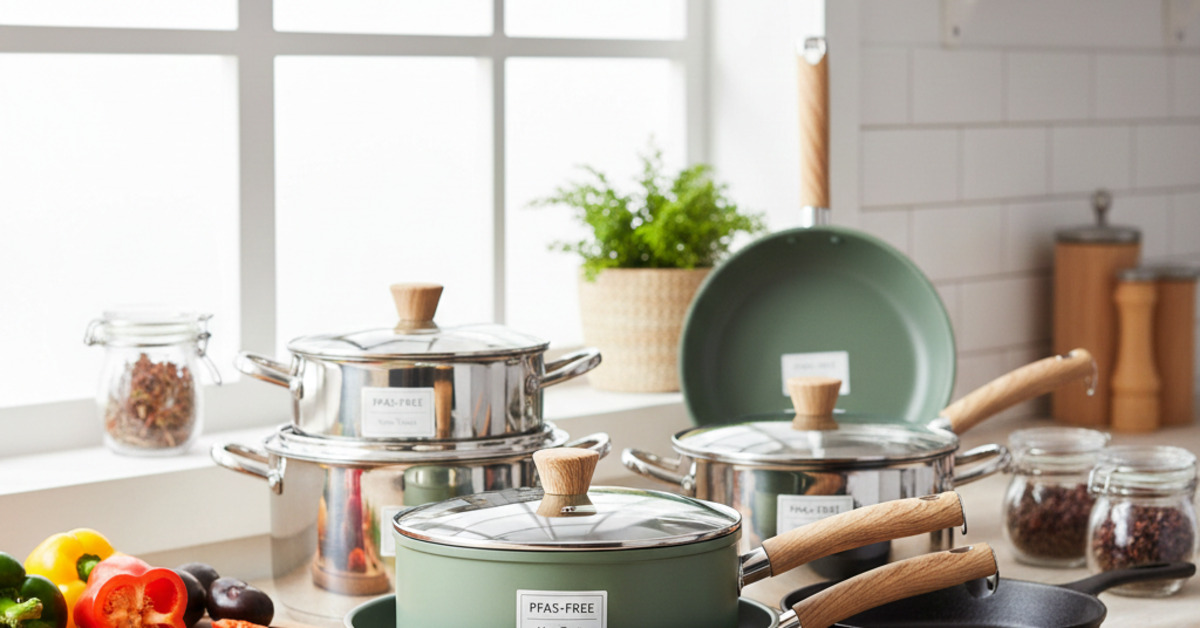
- What it is: This is the most popular modern non-stick alternative. It features a metal pan (usually aluminum) coated with a slick, ceramic layer derived from sand (sol-gel). It contains no PFAS, PFOA, lead, or cadmium.
- Pros: Excellent non-stick performance for low- to medium-heat cooking. It's lightweight, easy to clean, and comes in a variety of beautiful colors.
- Cons: The non-stick coating is less durable than traditional non-stick. Using metal utensils, high heat, or abrasive sponges will degrade the surface over time. It needs to be replaced every few years.
- Best Brands: Caraway is a top contender, famous for its stylish design and high-quality construction (leading to many positive Caraway cookware reviews). GreenPan is another pioneer in this space.
2. Cast Iron
- What it is: The original non-toxic workhorse. A well-seasoned cast iron skillet develops a natural non-stick surface over time.
- Pros: Incredibly durable (it will last a lifetime), retains heat exceptionally well (perfect for searing steaks), and is very affordable. It can also move from the stovetop directly into the oven.
- Cons: It's very heavy and requires maintenance. It needs to be "seasoned" with oil to prevent rust and maintain its non-stick properties, and it's not ideal for acidic foods like tomato sauce.
- Best Brands: Lodge is the classic, affordable, and high-quality American brand.
3. Stainless Steel
- What it is: The choice of professional chefs. Stainless steel cookware is made from a cladded metal, often with an aluminum or copper core for even heat distribution.
- Pros: Excellent heat control, durable, non-reactive (you can cook anything in it), and can handle high-heat cooking and searing perfectly.
- Cons: It is not non-stick. It requires a different cooking technique—preheating the pan properly and using enough oil—to prevent food from sticking. Cleanup can be more challenging.
- Best Brands: All-Clad is the gold standard (but very expensive). Cuisinart and Tramontina offer fantastic, more affordable options.
The Verdict: Cast Iron vs Stainless Steel vs Ceramic
The best healthy cookware for your kitchen is likely a combination of these materials.
- For your daily, low-heat workhorse (like cooking eggs): A ceramic non-stick pan is a great choice, as long as you treat it gently and accept that you'll need to replace it eventually.
- For searing, browning, and ultimate durability: A cast iron skillet is unbeatable.
- For boiling, making sauces, and all-around versatility: A set of stainless steel pots and pans is an essential investment for any serious home cook.
By consciously choosing PFAS-free pans, you can have peace of mind knowing that the healthy meals you prepare are not being compromised by the tools you use to cook them.