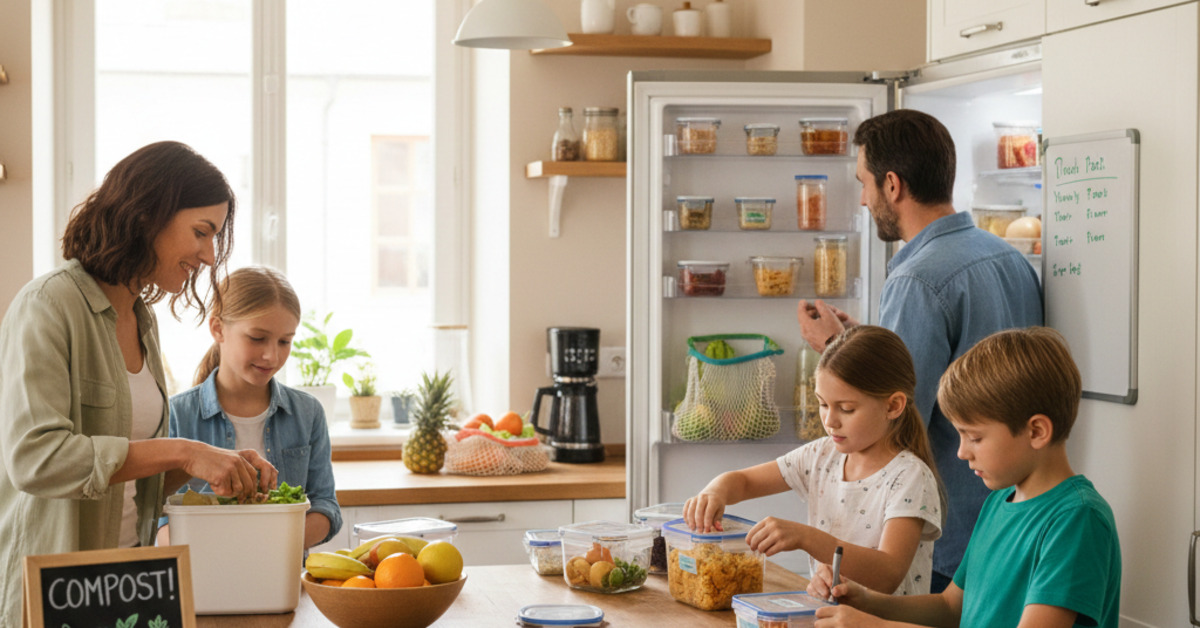
The Modern Family's Food Waste Problem
In a busy household, it happens all too easily. That half-eaten bag of spinach wilts in the crisper, leftovers from Tuesday get pushed to the back of the fridge, and you realize you bought a second carton of sour cream you didn’t need. For a family of four, this "accidental" waste can add up to hundreds of pounds of food and thousands of dollars thrown away each year. The good news is that with a few simple strategies, you can significantly reduce food waste, making your household more sustainable and saving a surprising amount on your grocery bills.
This guide provides practical food waste tips that are realistic for a busy family of four.
1. The "Shop Your Kitchen First" Meal Plan
The most effective way to combat waste is to know what you have before you buy more.
- Weekly Kitchen Audit: Once a week (before you go shopping), take a quick inventory of your fridge, freezer, and pantry. What needs to be used up? That half-full jar of pasta sauce, the softening bell peppers, the chicken in the freezer.
- Plan Meals Around Your Inventory: Base your first few meals of the week on these "use-it-up" items. This approach is central to effective family meal planning. If you have leftover rice and some aging broccoli, a stir-fry is a perfect dinner for tomorrow.
- Make a Smart Shopping List: Only after you’ve planned your meals should you create a shopping list. Stick to it! This prevents impulse buys and the purchase of duplicate ingredients you don't need.
2. Master the Art of Food Storage
How you store your food directly impacts its lifespan. Improper storage is a leading cause of food spoilage.
- "Eat Me First" Bin: Create a designated box or shelf in your refrigerator for items that need to be eaten soon. This could be leftovers, produce that’s starting to soften, or dairy products approaching their expiration date. It’s a visual reminder for the whole family.
- Store Produce Correctly: Not all produce is created equal. Store herbs like cilantro and parsley in a jar with water, like a bouquet of flowers. Keep potatoes and onions in a cool, dark place, but separate them. Wrap leafy greens in a damp cloth or paper towel before placing them in a bag. These simple kitchen waste solutions can extend the life of your produce by days or even weeks.
3. Embrace the "Use It All" Mentality
Get creative and find ways to use food scraps that you might normally toss.
- Repurpose Leftovers: Transform last night's dinner into a new meal. Leftover roasted chicken can become chicken salad sandwiches. Extra rice can be turned into fried rice. A "leftover smorgasbord" night once a week can also be a fun and easy way to clear out the fridge. Learning to use up leftovers creatively is a game-changer.
- Save Your Scraps: Keep a bag in your freezer for vegetable scraps like onion peels, carrot ends, and celery tops. Once the bag is full, you can boil the scraps to make a flavorful homemade vegetable broth for free.
4. Understand Dates: "Best By" vs. "Use By"
Don't be a slave to expiration dates. "Best By" and "Sell By" dates are manufacturer suggestions for peak quality, not safety. Most foods are perfectly safe to eat long after these dates. A "Use By" date is the only one that typically relates to food safety, commonly found on meat and dairy. Trust your senses—if it looks, smells, and tastes fine, it probably is. This simple shift in mindset can help you save money on groceries by not throwing away perfectly good food.
By implementing these small changes, your family can make a big difference. You’ll not only be contributing to a more sustainable family living environment but also enjoying the tangible benefits of a lower grocery bill.