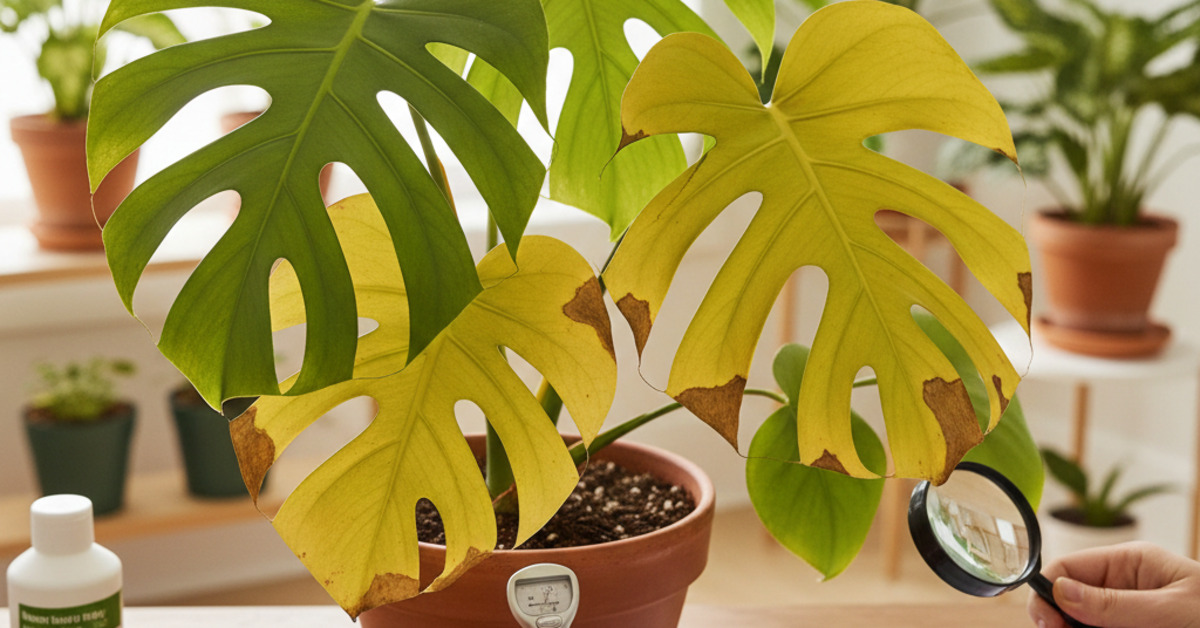
Don't Panic! Yellow Leaves are a Symptom, Not a Death Sentence
The Monstera Deliciosa, with its iconic split leaves, is a beloved houseplant. So when one of those gorgeous leaves starts to turn yellow, it's natural to feel a sense of dread. But take a deep breath! Yellow leaves on a Monstera are a common sign of stress, and your plant is telling you that it needs a change in its environment.
The key is to play detective. By examining the pattern of yellowing and considering your care routine, you can quickly diagnose the problem. Here are the most common culprits for why your plant leaves are yellow, and how to fix them.
Culprit #1: Overwatering (The Most Common Cause)
This is the number one reason for yellowing leaves on a Monstera, and it typically presents in a specific way.
- The Symptom: You'll see soft, droopy leaves that are turning a bright yellow, often starting with the lower leaves first. The soil will likely feel damp or soggy to the touch, and you may even see brown, mushy spots on the leaves in addition to the yellowing. This is a sign of root rot.
- The Diagnosis: You are giving your plant too much water, or its soil is not draining properly. The roots are suffocating and beginning to rot.
- The Fix:
- Stop Watering Immediately.
- Check the soil. If it's heavily waterlogged, you may need to repot the plant into fresh, dry, well-draining soil (like an aroid mix). When you do, inspect the roots and trim off any that are black and mushy.
- Going Forward: Only water your Monstera when the top 2-3 inches of soil are completely dry. A good way to test this is to stick your finger deep into the soil. If you feel any moisture, wait longer. Overwatering a Monstera is far more dangerous than underwatering it.
Culprit #2: Underwatering
While less common, underwatering can also cause yellow leaves, but they look different from overwatering.
- The Symptom: The leaves will look crispy, dry, and wilted. The yellowing might be accompanied by brown, crunchy edges. The entire plant may look droopy and sad, and the soil will be bone dry and pulling away from the sides of the pot.
- The Diagnosis: The plant is thirsty and is sacrificing its older leaves to conserve water for new growth.
- The Fix: Give your plant a thorough watering. The best method is to "bottom water." Place the pot in a sink or tub with a few inches of water and let it soak for 30-45 minutes. This allows the soil to rehydrate evenly. Then, let it drain completely.
Culprit #3: Lighting Issues
Monsteras have specific light needs, and too much or too little can cause stress.
The Symptom (Too Much Sun): You'll see pale, washed-out yellow leaves, sometimes with scorched, crispy brown spots. The yellowing will likely be on the leaves that are getting the most direct sunlight.
The Fix: Move your plant out of the direct sunbeams. Monstera lighting should be bright but indirect. They are happy a few feet away from a sunny window or right in an east-facing window that only gets gentle morning sun.
The Symptom (Not Enough Light): The leaves may turn a pale, sickly yellow, and the plant will look "leggy," meaning it has long, stretched-out stems as it reaches for more light. You'll also notice a lack of the famous Monstera splits or "fenestrations."
The Fix: Move your plant to a brighter location where it can get several hours of indirect sunlight each day.
Culprit #4: Nutrient Deficiency
- The Symptom: If your plant hasn't been fertilized in a long time and you've ruled out all the above, it might be hungry. A nutrient deficiency often presents as a general, uniform paleness or yellowing across the plant.
- The Fix: During the growing season (spring and summer), feed your Monstera with a balanced liquid fertilizer every 4-6 weeks. Do not fertilize in the fall and winter when the plant's growth slows down.
By carefully observing your plant and being honest about your care routine, you can easily solve the mystery of the yellow leaves and get your beautiful Monstera back on track to thriving.