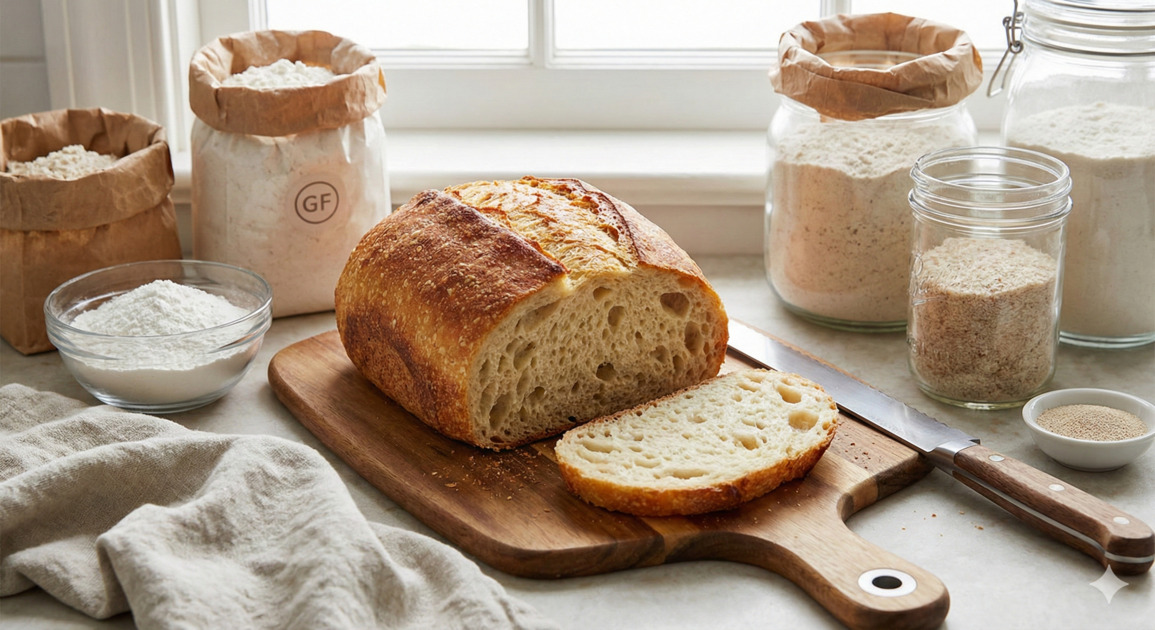
Best Gluten-Free Flour Blends for Baking Bread
If you are new to the gluten-free lifestyle, your first attempt at baking a loaf of bread probably ended in tragedy. You likely pulled a dense, gummy brick out of the oven that crumbled the moment you touched it.
The hard truth is that baking without gluten is chemistry, not magic. Gluten provides the elasticity and structure that traps gas bubbles, allowing bread to rise. Without it, you are essentially baking a mud pie.
However, not all flours are created equal. Many generic "all-purpose" GF blends are heavy on cornstarch and designed for cookies or muffins, not yeast breads. To get that bakery-style crumb, you need a blend specifically engineered for structure.
Here are the best gluten-free flour blends for baking bread that actually work.
1. The "Real Deal" Texture: Caputo Fioreglut
If you can tolerate wheat starch (meaning you have Celiac disease but not a wheat allergy), Caputo Fioreglut is the Holy Grail.
- The Secret: It uses gluten removed wheat starch. This creates a texture so identical to traditional white bread that it is almost unsettling.
- Best For: Pizza crusts, focaccia, and artisan-style crusty loaves.
- Why it wins: It creates the large air pockets and chewy crust that rice-flour blends simply cannot replicate. It handles remarkably like regular dough.
2. The Accessible Choice: King Arthur Gluten-Free Bread Flour
Note the name: "Bread Flour," not "Measure for Measure." King Arthur recently released a specific blend for yeast baking that includes wheat starch (again, Celiac-safe).
- The Secret: If you need a wheat-free option, their standard "All-Purpose Gluten-Free Flour" (the box without xanthan gum) is a great base, but you must add your own binder.
- Best For: Sandwich bread and cinnamon rolls.
- Tip: When using their non-wheat starch blends, you often need to increase the hydration. GF flour is thirsty!
3. The Structure King: Better Batter Original Blend
For those who cannot eat wheat starch, Better Batter is widely considered the top allergen-free choice for gluten free bread flour blends.
- The Secret: It has a high ratio of pectin and xanthan gum already mixed in. This saves you from buying expensive additives.
- Best For: Soft sandwich loaves and dinner rolls.
- Why it wins: It absorbs liquid consistently, preventing that dreaded "gritty" rice texture.
The DIY Approach: The Psyllium Husk Hack
If you are tired of expensive pre-made mixes, you can make your own homemade gluten free bread flour recipe. The game-changer here is baking with psyllium husk powder.
Unlike xanthan gum, which can sometimes make bread feel "slimy" or gummy, whole psyllium husk acts like a gel network, mimicking the structure of gluten.
A Simple DIY Bread Blend:
- 2 parts Brown Rice Flour (for bulk)
- 1 part Potato Starch (for lightness)
- 1 part Tapioca Flour (for stretch)
- Add psyllium husk powder directly to your liquid ingredients, not the flour.
Final Baking Tips
- Don't Punch Down: unlike regular dough, GF dough only needs one rise. If you punch it down, it won't rise again.
- Use a Scale: Volume measurements (cups) are notoriously inaccurate for dense GF flours. Always weigh your ingredients in grams.
Final Thoughts
You don't have to settle for frozen, cardboard-tasting bread. By switching from a generic cake blend to a high-protein, starch-balanced bread flour, you can finally bake a loaf that bends without breaking.