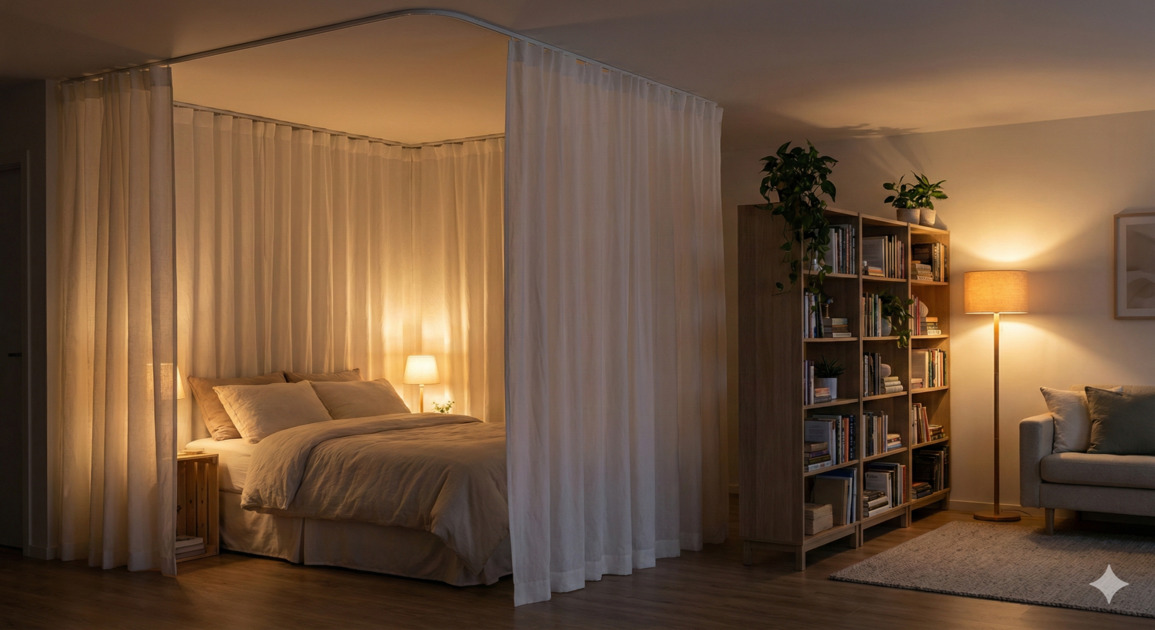
How to Create a "Sleep Sanctuary" in a Studio Apartment
Living in a studio apartment offers financial freedom and minimalist charm, but it presents a unique physiological challenge: your brain is confused. When your desk, your dining table, and your bed are all in the same 400-square-foot box, it is difficult to switch off "work mode" and enter "rest mode."
To get high-quality rest, you don't need more square footage; you need better boundaries. Creating a dedicated sleep environment is about tricking your senses into believing you have left the day behind.
Here is how to master studio apartment zoning and build a sleep sanctuary that feels miles away from your kitchen sink.
1. Create a Visual "Wall"
The most effective way to signal to your brain that it is time to sleep is to block out the reminders of your day. If you can see your dirty dishes or your laptop from your pillow, your stress levels will remain elevated.
You need effective studio apartment bedroom divider ideas that don't make the room feel cramped.
- The Bookshelf Barrier: Use an open-back bookshelf (like an IKEA KALLAX) to physically separate the bed from the living area. It lets light through but clearly defines the "bedroom."
- Curtain Tracks: Installing a ceiling-mounted curtain track allows you to completely enclose your bed at night, creating a cozy "room within a room" feeling.
- Folding Screens: For a rental-friendly option, a simple rattan folding screen can hide your workspace from view when you lie down.
2. Master Lighting Zones
Lighting is the most powerful cue for your circadian rhythm. In a studio, you often have one main overhead light, which is a disaster for small space sleep hygiene.
Treat your sleep nook as a separate lighting zone. As soon as the sun sets, turn off the overhead lights. Use warm-toned, low-lumen lamps on your nightstand. This signals to your body that you have entered a different space. Avoid cool, blue-light bulbs near the bed, as these mimic daylight and suppress melatonin.
3. The "Bed is for Sleep" Rule
When you are sleeping in a studio apartment, the bed often doubles as a couch or a laundry folding station. This weakens your brain's association between the bed and sleep.
To reclaim your sanctuary, enforce a strict boundary: the bed is for sleep and intimacy only. Do not work on your laptop in bed. Do not eat dinner in bed. If you need a lounge area, invest in a small armchair or even a comfortable floor cushion. By protecting the bed as a "no-work zone," you train your brain to wind down the moment your head hits the pillow.
4. Control the Soundscape
Studio apartments often mean you are sleeping closer to the hallway or a noisy fridge. Since you don't have a bedroom door to close, you need an auditory door.
Invest in a quality white noise machine or use a fan. A steady hum of "brown noise" or "pink noise" is excellent for masking the sudden sounds of neighbors or appliances that are typical in small apartment living.
Final Thoughts
Creating a sleep sanctuary isn't about expensive furniture; it is about intentionality. By using visual dividers and strict behavioral zones, you can turn even the smallest corner of a studio into a peaceful retreat.