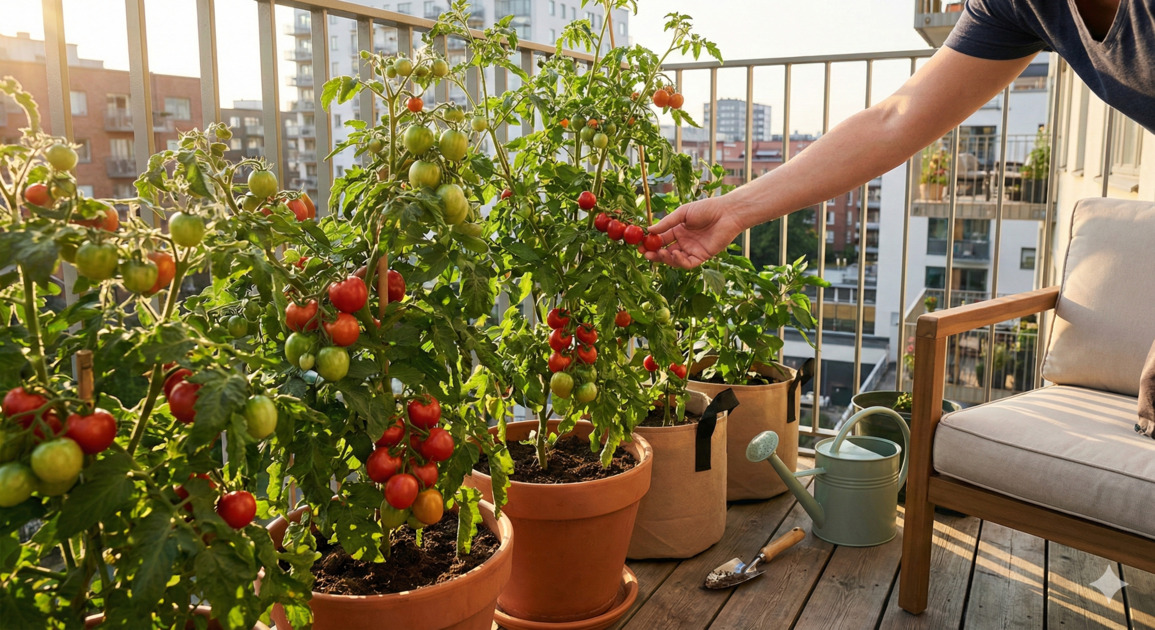
How to Grow Tomatoes on an Apartment Balcony
There is nothing quite like the taste of a sun-warmed tomato plucked straight from the vine. It is sweet, tangy, and miles better than the bland, refrigerated options at the supermarket. But for those of us living in cities, the dream of a vegetable patch often feels out of reach.
The good news is that you don't need a sprawling backyard to enjoy a harvest. In fact, a sunny balcony is often the perfect micro-climate for heat-loving crops. Growing tomatoes in pots on balcony spaces is one of the most rewarding entry points into urban farming.
If you are ready to turn your concrete terrace into a green oasis, here is how to get started.
1. Choose the Right Variety
This is the most critical step. If you buy a standard tomato seedling intended for a farm, it will grow 8 feet tall and take over your entire balcony.
For container gardening, you want to look for specific types:
- Determinate (Bush) Varieties: These grow to a fixed size (usually 3-4 feet), set all their fruit at once, and stop growing. They are manageable and sturdy.
- Dwarf or "Patio" Varieties: These are bred specifically for small space gardening. Varieties like "Tiny Tim" or "Patio Princess" thrive in smaller pots.
- Cherry Tomatoes: If you are a beginner, start here. They ripen faster and are generally more forgiving of mistakes than large beefsteak tomatoes.
2. The Pot and The Soil
Size matters. A common mistake is using a pot that is too small, which leads to root-bound, thirsty plants.
- Container Size: For a healthy plant, use a container that holds at least 5 gallons of soil. Fabric grow bags are excellent for balconies because they are lightweight and improve airflow to the roots.
- Drainage: Ensure your pot has holes. Tomatoes hate "wet feet."
- Soil: Never use dirt from the ground (garden soil), which compacts in pots. Buy a high-quality potting mix that is fluffy and holds moisture well.
3. The Sunlight Factor
Tomatoes are sun-worshippers. They require at least 6 to 8 hours of direct sunlight daily.
- Tip: If your balcony faces north or is shaded by other buildings, tomatoes might struggle. If you have a south-facing spot, you are golden. Watch out for the "heat trap" effect on enclosed balconies—if it gets too hot (over 90°F/32°C), pollen can become sterile.
4. Watering and Wind
Watering tomatoes in containers is different from watering the ground. Pots dry out much faster, especially on windy high-rise balconies.
- The Check: Stick your finger an inch into the soil every morning. If it's dry, water it deeply until water comes out of the bottom. In the peak of summer, you might need to water twice a day.
- Consistency: Irregular watering leads to Blossom End Rot (where the bottom of the fruit turns black). Keep the moisture steady.
5. The High-Rise Problem: Pollination
In a garden, bees do the work. On a 10th-floor balcony, you might not have many pollinators.
- The Fix: You need to help nature along. Hand pollinating tomatoes is easy. When the yellow flowers open, simply give the main stem of the plant a gentle shake for a few seconds every day. This releases the pollen within the flower and ensures you actually get fruit.
Final Thoughts
Starting a balcony vegetable garden connects you to nature in the middle of the concrete jungle. With a little water, some sun, and the right pot, you'll be slicing up your own homegrown salad in no time.