How to Start an Apartment Compost Bin (Smell-Free Guide)
For eco-conscious city dwellers, the garbage disposal is a source of guilt. You watch nutrient-rich banana peels, coffee grounds, and vegetable ends disappear into the trash, knowing they will release methane in a landfill. But the alternative—a rotting pile of garbage in your tiny kitchen—seems even worse.
The biggest myth about indoor composting for beginners is that it has to smell. In reality, a healthy compost system smells like earthy soil. If it smells like garbage, something is wrong.
You don't need a backyard to reduce your waste. Here is how to start an apartment compost bin that won't attract fruit flies or offend your roommates.
1. The "Lazy" Solution: The Freezer Method
If you are terrified of bugs or smells, start here. This isn't technically "composting" (decomposition), but rather "scrap collection."
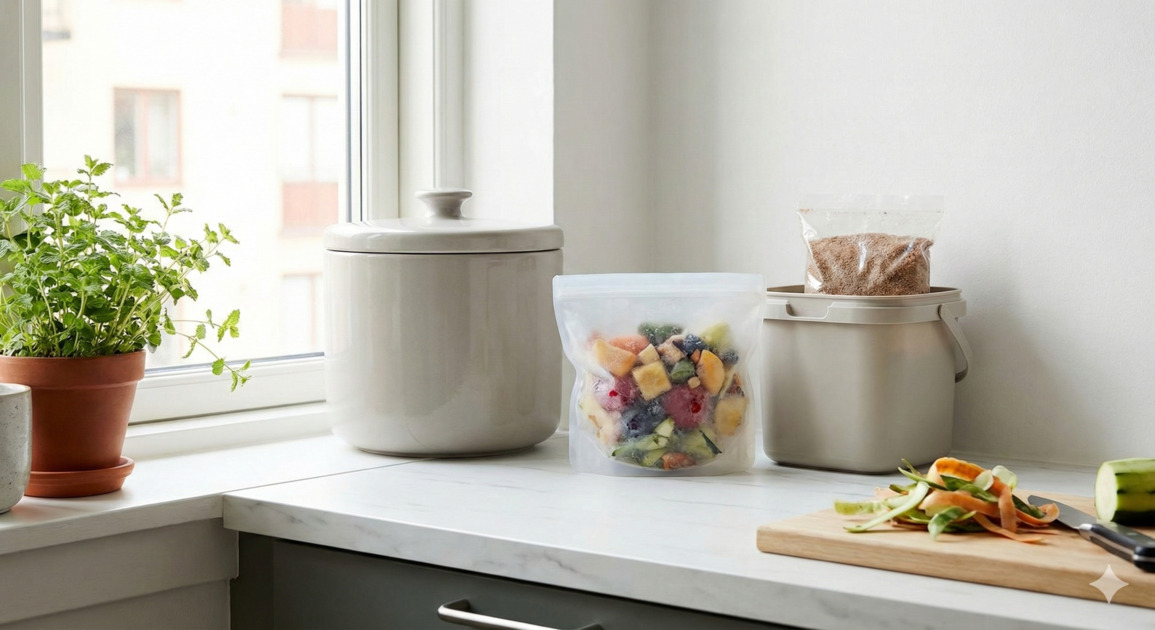
How it works: Buy a dedicated sealable container or a silicone bag. As you cook, toss your scraps in and immediately put the container back in the freezer.
- The Benefit: Freezing stops decomposition instantly. There is zero smell and zero chance of fruit flies.
- The End Game: Once the bag is full, take it to a local farmer's market drop-off, a community garden, or a friend with a backyard bin. This is the ultimate smell-free compost bin apartment hack.
2. The Speed Demon: Bokashi Composting
If you want to actually break down waste inside your home, Bokashi is a Japanese method that uses fermentation.
How it works: You need a specific "Bokashi bucket" which has a spigot at the bottom, and "Bokashi bran" (inoculated with beneficial microbes). You layer your food scraps with the bran and seal the lid tight.
- The Benefit: Unlike traditional composting, Bokashi bin for small apartments allows you to compost meat, dairy, and cooked food. It works anaerobically (without air), so it pickles the food rather than rotting it.
- The Catch: It produces a "tea" that needs to be drained, and the solid waste eventually needs to be buried in soil (or a large pot on a balcony) to finish decomposing.
3. The Classic: Vermicomposting (Worm Bins)
Don't panic. Red Wiggler worms are clean, quiet, and odorless pets that eat half their body weight in scraps daily.
How it works: Use an opaque plastic tote with holes drilled for air. Fill it with damp shredded newspaper or cardboard ("browns") and add your worms. Bury your food scraps ("greens") under the paper.
- The Benefit: This creates "black gold"—nutrient-dense fertilizer for your houseplants.
- The Trick: The key to vermicomposting indoors is ratio. You need more carbon (paper/cardboard) than nitrogen (food). If the bin gets wet or smelly, add more shredded paper immediately.
What NOT to Compost Indoors
To keep your relationship with your neighbors intact, avoid putting these items in a standard or worm bin:
- Meat and bones (unless using Bokashi)
- Dairy products
- Oily foods
- Pet waste
Final Thoughts
Living in a high-rise shouldn't stop you from closing the loop on your food waste. Whether you choose the freeze-and-drop method or adopt a family of worms, small space composting is easier and cleaner than you think. Start small, balance your greens and browns, and enjoy a lighter trash bag.